Overview
Adapted from Scientific American and Connections Education
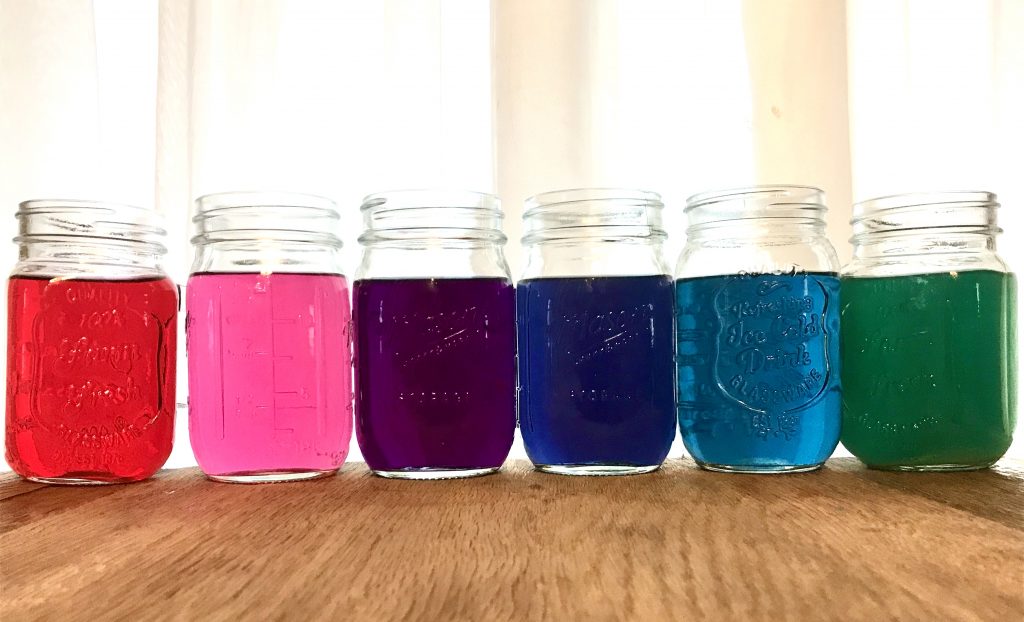
In this colorful experiment, students extract red cabbage indicator (an anthocyanin) with isopropyl alcohol or water. Students then create a series of solutions of household chemicals and use their indicator and pH strips (or a pH probe, $19) to correlate pH to color change. Based on their results, students create an infographic of pH vs. color change, which they can use in subsequent experiments.
This experiment can be adapted depending on the level of difficulty required: the included post-lab questions ask students to categorize the household materials into acids, bases, or salts, then write equations for their reactions with water in order to explain the observed pH values.
All chemicals can be safely disposed down the drain with plenty of rinsing.
Materials
- 50-100 g chopped red cabbage
- pH strips
- Possible household chemicals:
- lemons or limes
- vinegar
- bleach-based cleaning product (e.g., Ajax with bleach)
- colorless beverage (7up or Sprite)
- baking soda
- washing soda
- borax
- salt
- shampoo
- milk
- sugar
Handouts