Loop Injector for HPLC
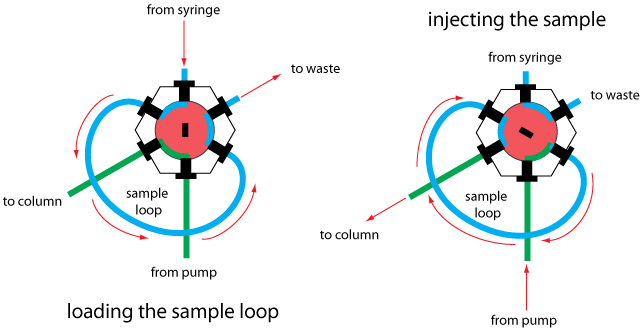
The operating pressure of an HPLC is sufficiently high that we cannot inject the sample into the mobile phase by inserting a syringe through a septum (as we can do in gas […]

Explore resources, experiments, and teaching materials shared by the analytical sciences community.
The operating pressure of an HPLC is sufficiently high that we cannot inject the sample into the mobile phase by inserting a syringe through a septum (as we can do in gas […]
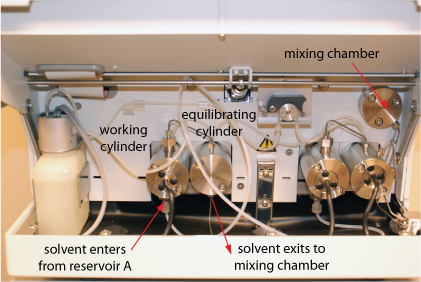
A typical HPLC includes between 1–4 reservoirs for mobile phase solvents. The mobile phase solvents are pulled from their reservoirs by the action of one or more pumps. Shown here is a close-up […]
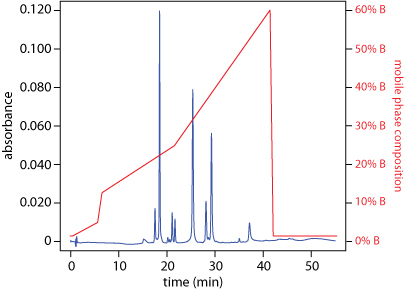
The illustration below shows the gradient elution separation of a mixture of flavonoids. Mobile phase A is an aqueous solution of 0.1% formic acid and mobile phase B is 0.1% formic acid […]
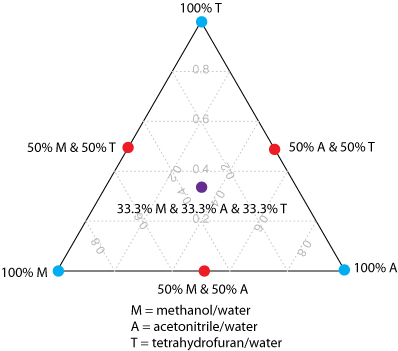
One strategy for finding the best mobile phase for an HPLC separation is to use the solvent triangle, which allows us to explore a broad range of mobile phases with just seven […]
The most common type of HPLC column is a stainless steel tube with an internal diameter between 2.1 mm and 4.6 mm and a length between 30 mm and 300 mm. The […]
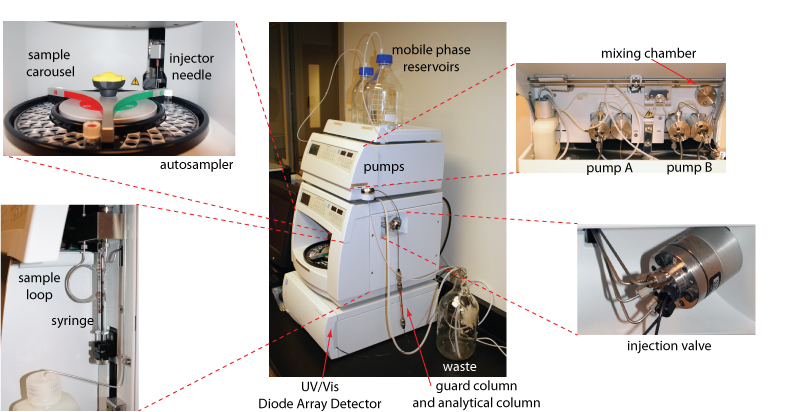
The photo below shows an example of a typical HPLC instrument with insets showing close-up views of the pumps that move the mobile phase through the system, and the plumbing used to inject […]
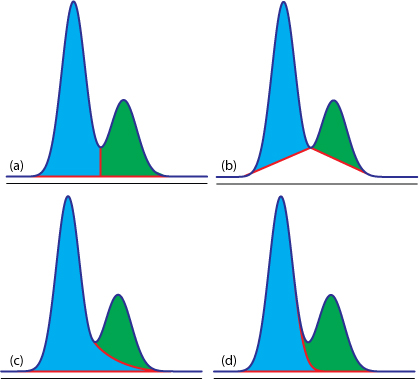
In a GC analysis the area under the peak is proportional to the amount of analyte injected onto the column. The peak’s area is determined by integration, which usually is handled by […]
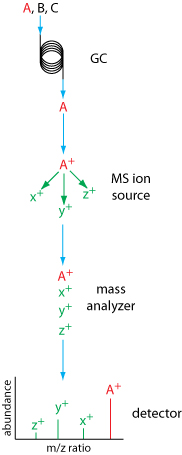
The figure below provides a block diagram of a typical gas chromatography-mass spectrometer (GC–MS) instrument. As illustrated here, a three component mixture enters the GC. When component A elutes from the column, it enters […]
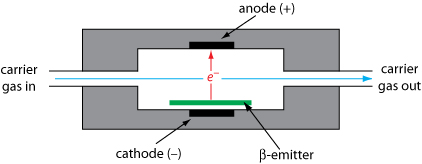
Shown here is a schematic diagram of electron capture detector (ECD) for gas chromatography. The detector consists of a β-emitter, such as 63Ni. The emitted electrons ionize the mobile phase, which is […]
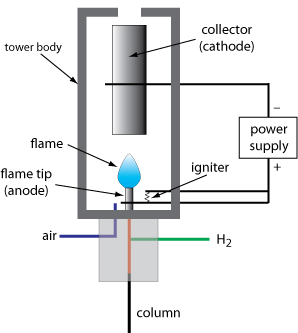
The schematic diagram below shows a flame ionization detector for gas chromatography. The eluent from the column mixes with H2 and is burned in the presence of excess air. Combustion of organic […]
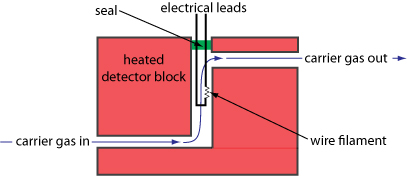
One of the earliest gas chromatography detectors takes advantage of the mobile phase’s thermal conductivity. As the mobile phase exits the column it passes over a tungsten-rhenium wire filament (see figure below). […]
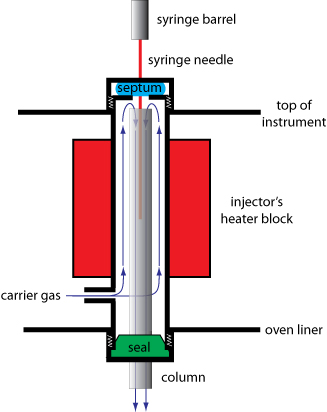
Shown here is a schematic diagram of a heated GC injector port for use with packed columns. The needle from the syringe pierces a rubber septum and enters into the top of […]