Liquid-Liquid Extractions
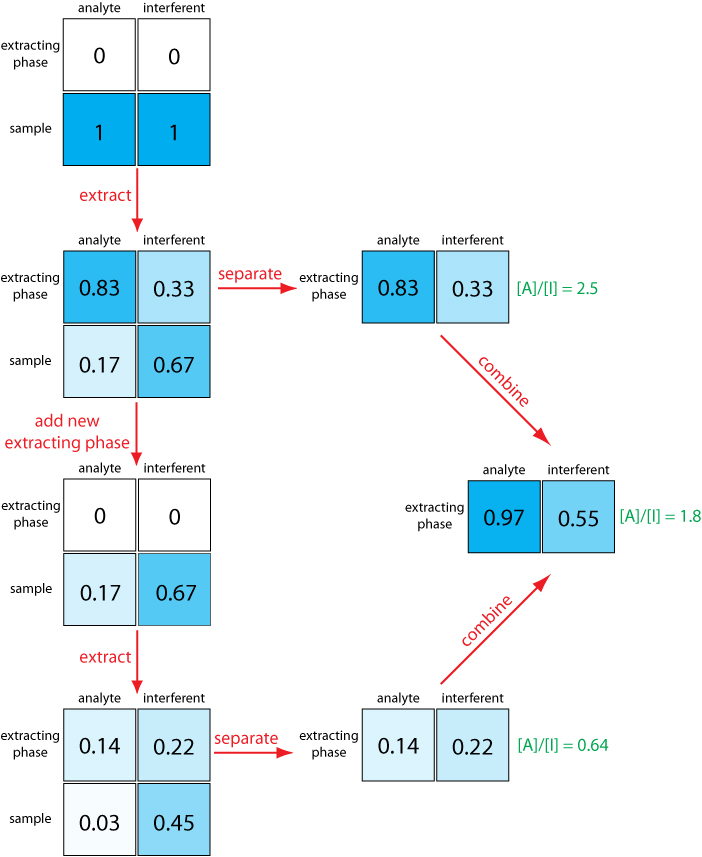
Shown here is an illustration outlining the progress of a traditional liquid–liquid extraction (LLE) using two identical extractions of a single sample with fresh portions of the extractant. The numbers give the […]

Get a look at images, photos, videos, and animations that encompass many facets of teaching and learning about analytical chemistry.
Shown here is an illustration outlining the progress of a traditional liquid–liquid extraction (LLE) using two identical extractions of a single sample with fresh portions of the extractant. The numbers give the […]
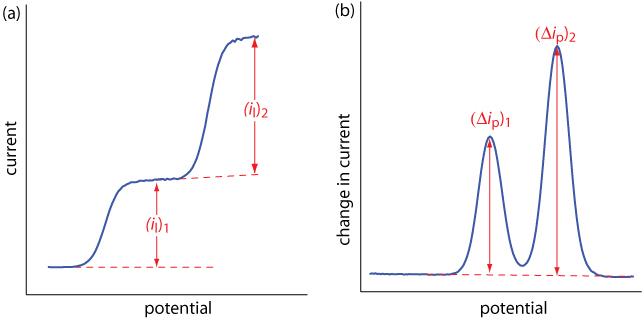
Voltammetry is a particularly attractive technique for the analysis of samples containing two or more analytes. Provided that the analytes behave independently, the voltammogram of a multicomponent mixture is a summation of […]
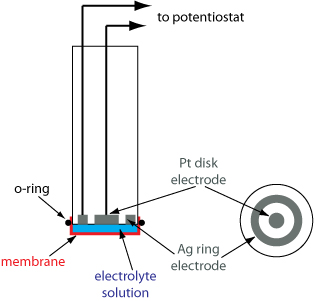
In amperometry we apply a constant potential to the working electrode and measure current as a function of time. Because we do not vary the potential, amperometry does not result in a […]
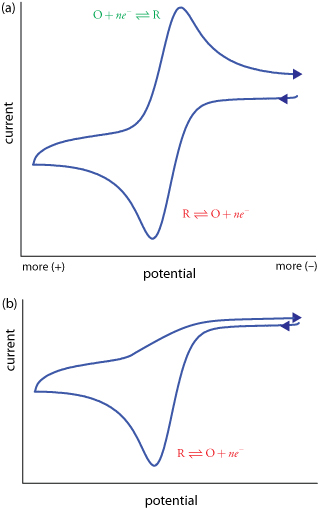
In a cyclic voltammetry experiment, scanning the potential in both directions provides with the opportunity to explore the electrochemical behavior of species generated at the electrode. This is a distinct advantage of […]
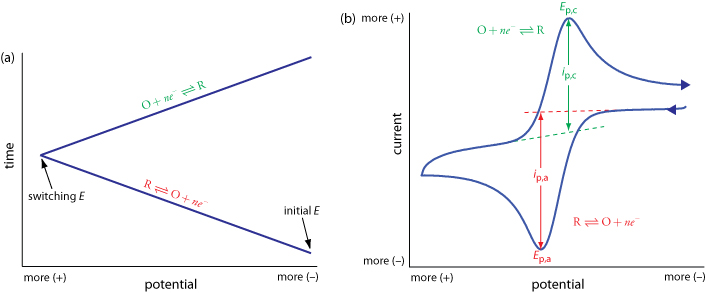
In cyclic voltammetry (CV) we scan the potential in both the cathodic and anodic directions. The illustration below shows a typical potential-excitation signal (a) in which we first scan the potential to […]
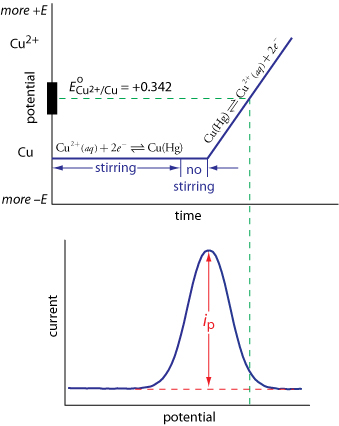
As illustrated here, anodic stripping voltammetry (ASV) consists of two steps. The first step is a controlled potential electrolysis in which we hold the working electrode—usually a hanging mercury drop or a […]
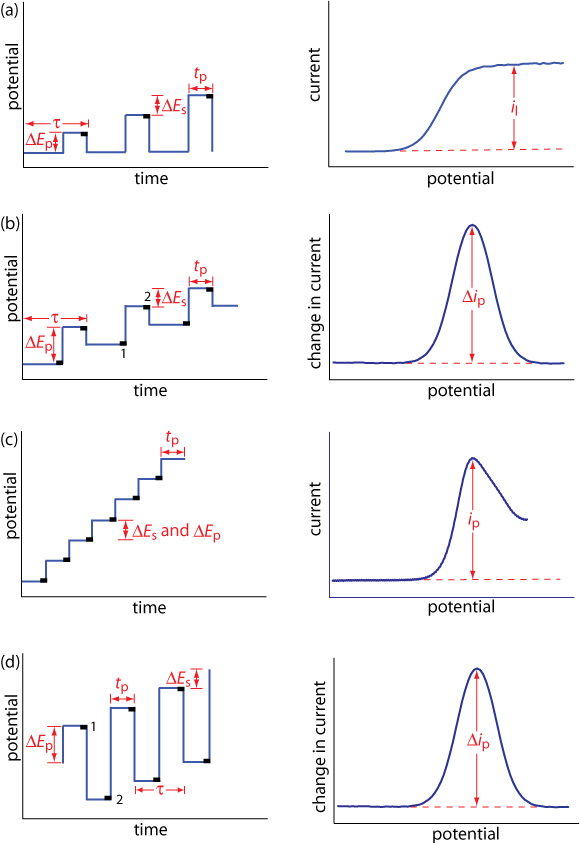
Normal polarography has been replaced by various forms of pulse polarography, several examples of which are shown here. Normal pulse polarography (a), for example, uses a series of potential pulses characterized by […]
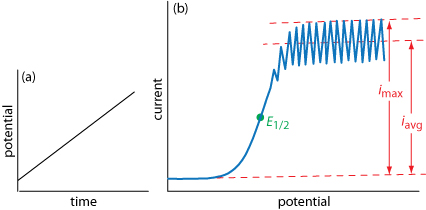
The first important voltammetric technique to be developed—polarography—uses the dropping mercury electrode as the working electrode. As shown here, the current flowing through the electrochemical cell is measured while applying a linear […]
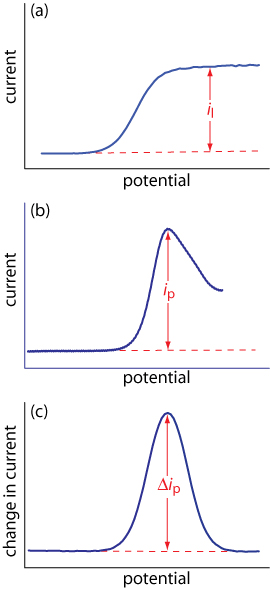
In voltammetry we measure current as a function of the applied potential. The shape of a voltammogram is determined by several experimental factors, the most important of which are how we measure […]
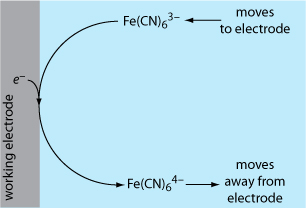
Let’s assume we have a solution that is 1.0 mM in Fe(CN)63– is 1.0 mM. The standard state potential for the reduction of Fe(CN)63– to Fe(CN)64– is +0.356 V. If we apply a potential of […]
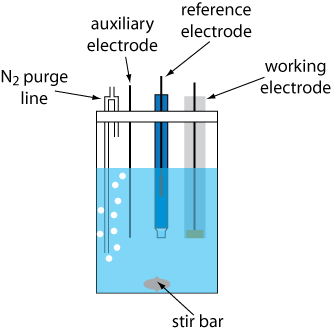
A typical arrangement for a voltammetric electrochemical cell is shown here. In addition to the working electrode, the reference electrode, and the auxiliary electrode, the cell also includes a N2-purge line for […]
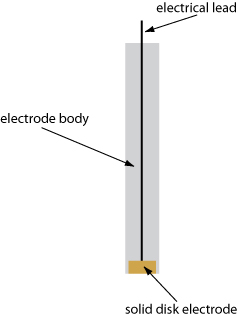
Schematic diagram showing a solid electrode. The electrode is fashioned into a disk and sealed in the end of an inert polymer support along with an electrical lead.