Showing 1–10 of 10 posts

Cyclic Voltammetry

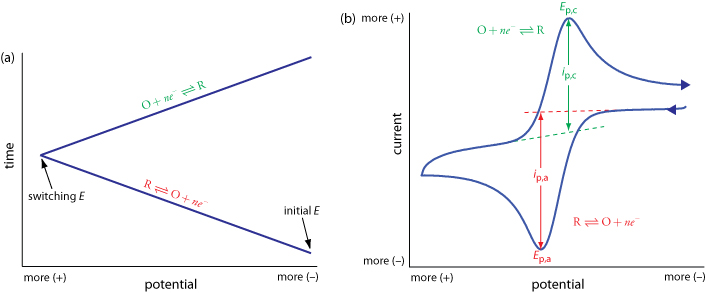
In cyclic voltammetry (CV) we scan the potential in both the cathodic and anodic directions. The illustration below shows a typical potential-excitation signal (a) in which we first scan the potential to […]

Anodic Stripping Voltammetry

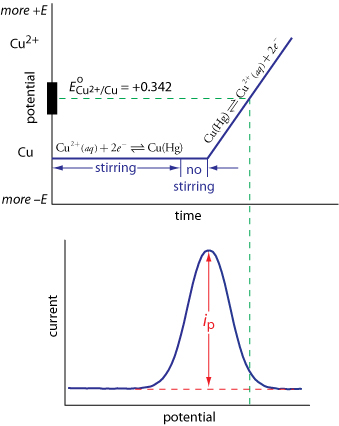
As illustrated here, anodic stripping voltammetry (ASV) consists of two steps. The first step is a controlled potential electrolysis in which we hold the working electrode—usually a hanging mercury drop or a […]

Pulse Polarography

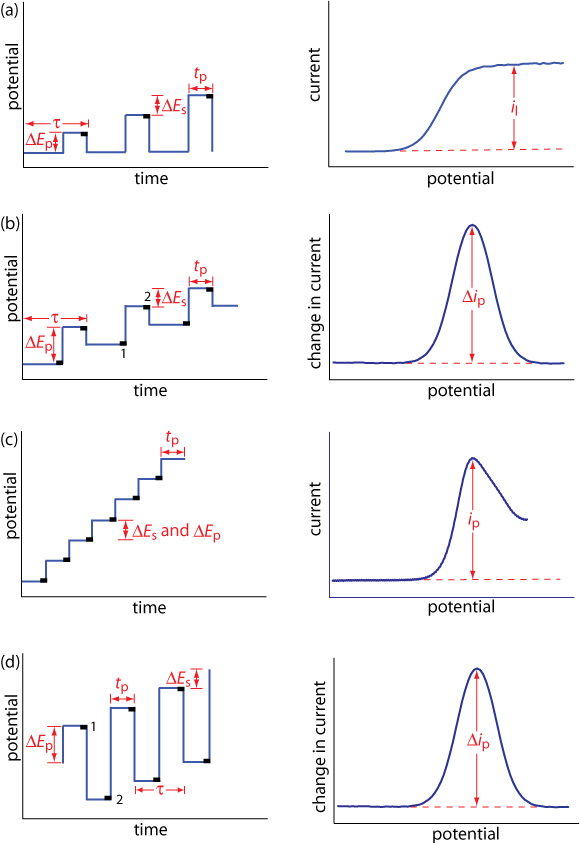
Normal polarography has been replaced by various forms of pulse polarography, several examples of which are shown here. Normal pulse polarography (a), for example, uses a series of potential pulses characterized by […]

Normal Polarography

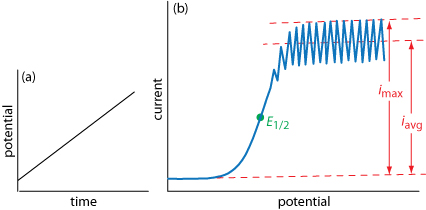
The first important voltammetric technique to be developed—polarography—uses the dropping mercury electrode as the working electrode. As shown here, the current flowing through the electrochemical cell is measured while applying a linear […]

Shape of Voltammograms

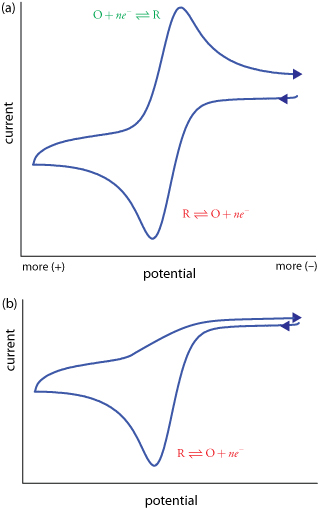
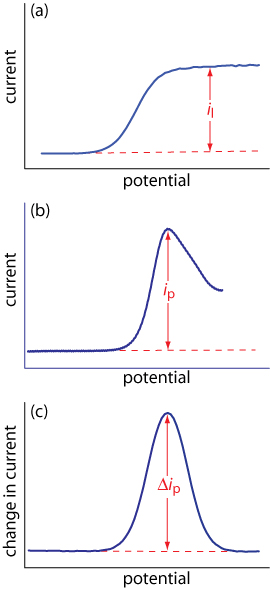
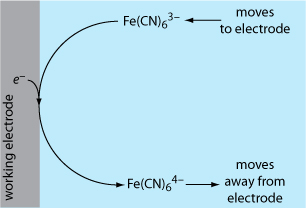
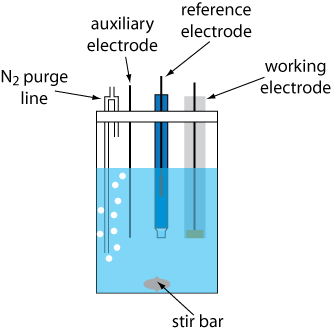
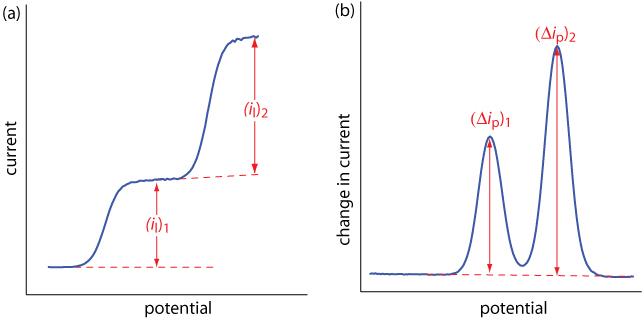
In voltammetry we measure current as a function of the applied potential. The shape of a voltammogram is determined by several experimental factors, the most important of which are how we measure […]