Solid-State Extractions
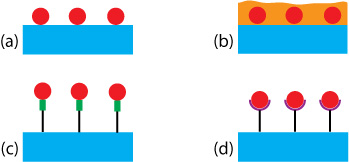
Illustration showing four possible mechanisms for the solid-state extraction of an analyte: (a) adsorption onto a solid substrate; (b) absorption into a thin polymer film or chemical film coated on a solid […]

Get a look at images, photos, videos, and animations that encompass many facets of teaching and learning about analytical chemistry.
Illustration showing four possible mechanisms for the solid-state extraction of an analyte: (a) adsorption onto a solid substrate; (b) absorption into a thin polymer film or chemical film coated on a solid […]
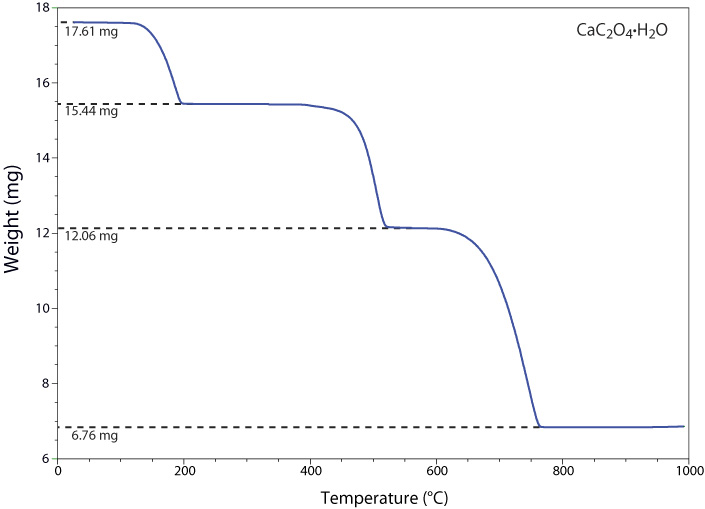
In a thermogravimetric analysis we measure the mass of a sample while heating the sample over time. The top photo shows a typical thermogravimetric analyzer and the bottom photo shows a close-up […]
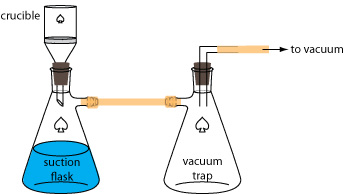
Illustration showing the equipment for filtering a precipitate through a filtering crucible. Suction from a vacuum, often from a water aspirator, pulls the solution through the filtering crucible leaving the precipitate behind. […]
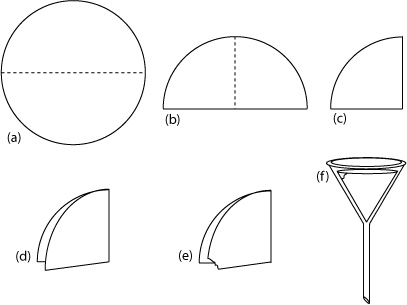
Illustration showing how to prepare a filter paper cone for gravity filtration. The filter paper circle in (a) is folded in half (b), and folded in half again (c). The folded filter […]
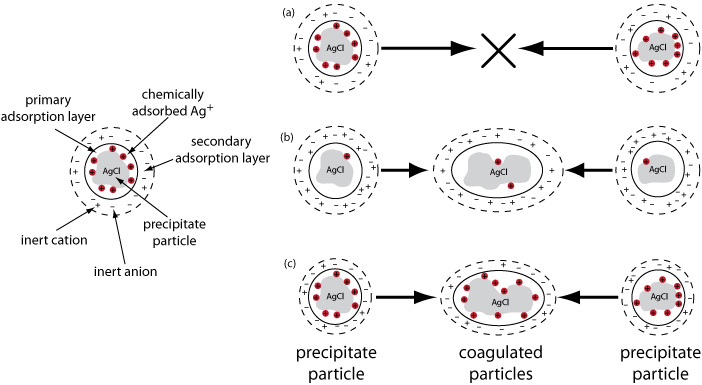
Two methods for coagulating a precipitate of AgCl are illustrated here: (a) because of electrostatic repulsion, coagulation will not take place if both particles are positively charged; (b) decreasing the charge within […]
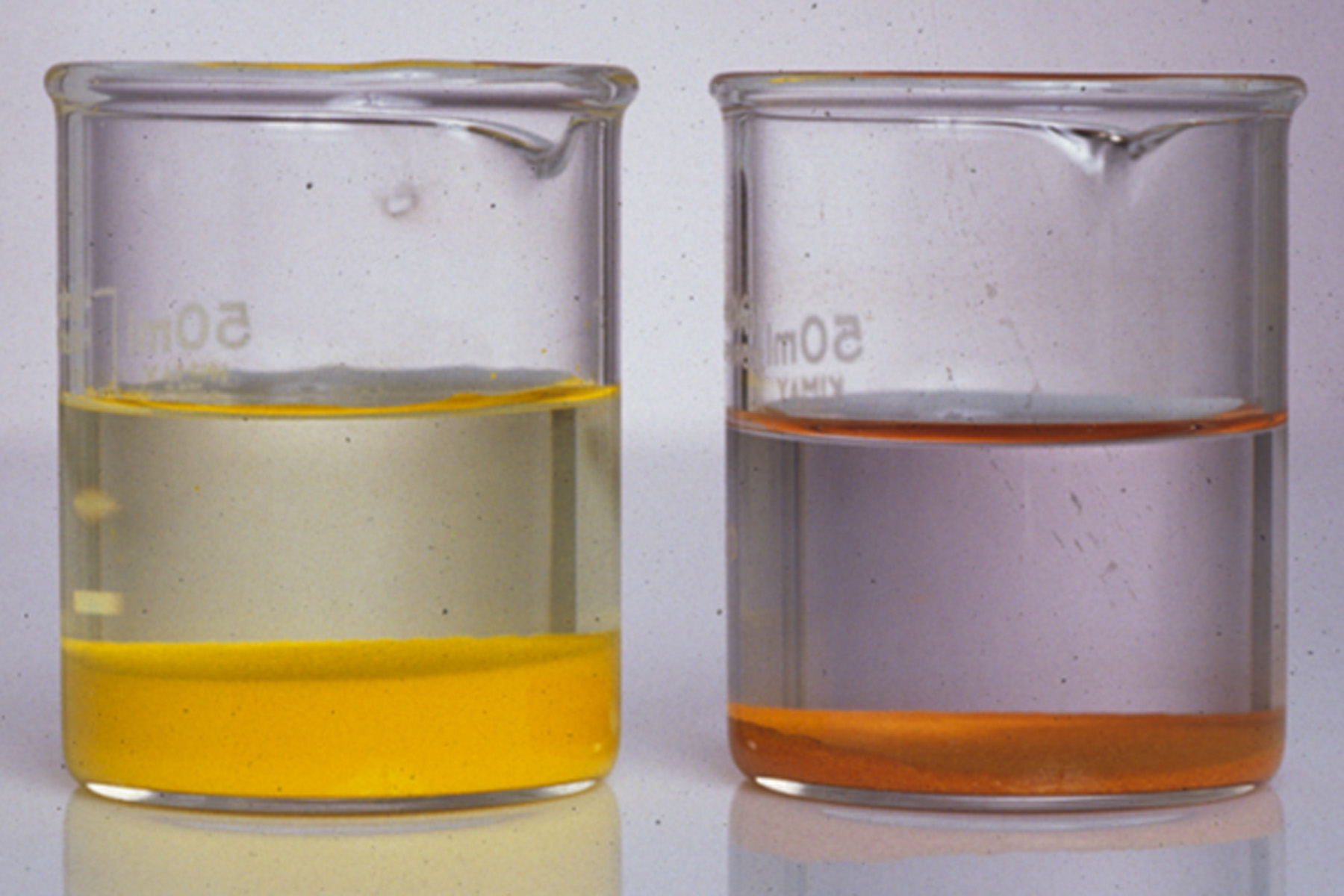
Two precipitates of PbCrO4 are shown in this photo. The precipitate in the beaker on the left was formed by pouring quickly a solution 0.1 M Pb(NO3)2 into a solution of 0.1 M […]
Mixing solutions of 1.5 M KNO3 and 1.5 M HClO4 produces a white precipitate of KClO4. If permanganate ions, MnO4–, are present, an inclusion of KMnO4 is possible. Impure precipitates of KClO4 […]
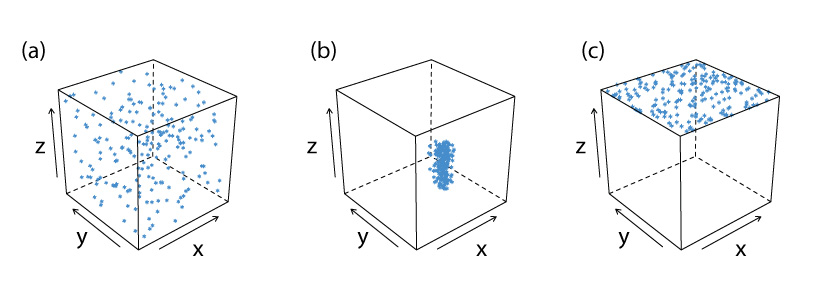
Three examples of impurities that may form during precipitation. The cubic frame represents the precipitate and the blue marks are impurities: (a) inclusions, (b) occlusions, and (c) surface adsorbates. Inclusions are randomly […]