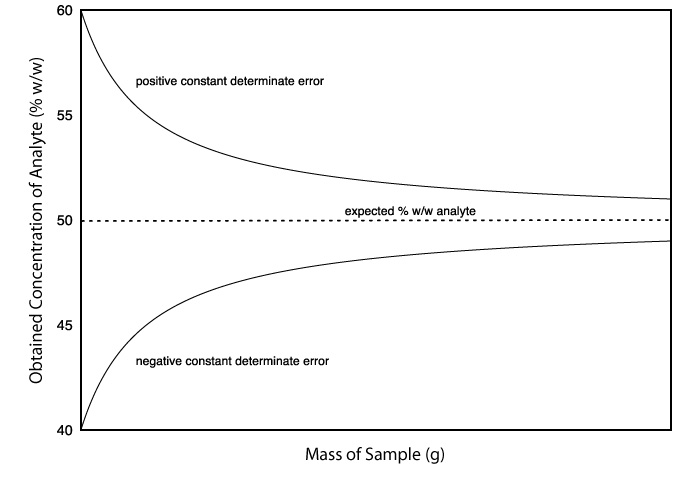
Constant Determinate Errors
The magnitude of a constant determinate error is the same for all samples and is more significant when analyzing smaller samples. Analyzing samples of different sizes, therefore, allows us to detect a […]

The magnitude of a constant determinate error is the same for all samples and is more significant when analyzing smaller samples. Analyzing samples of different sizes, therefore, allows us to detect a […]
Choosing an analytical methods requires a consideration of three potential limitations: the amount of sample available for the analysis, the expected concentration of analyte in the samples, and the minimum amount of […]
Two determinations of the concentration of K+ in serum, showing the effect of precision on the distribution of individual results. The data in (a) are less scattered and, therefore, more precise than […]
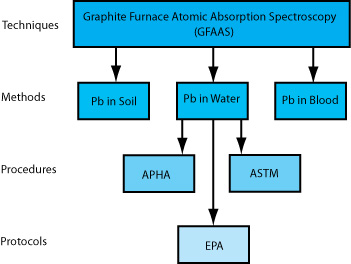
Suppose you are asked to develop an analytical method to determine the concentration of lead in drinking water. How would you approach this problem? To provide a structure for answering this question, […]
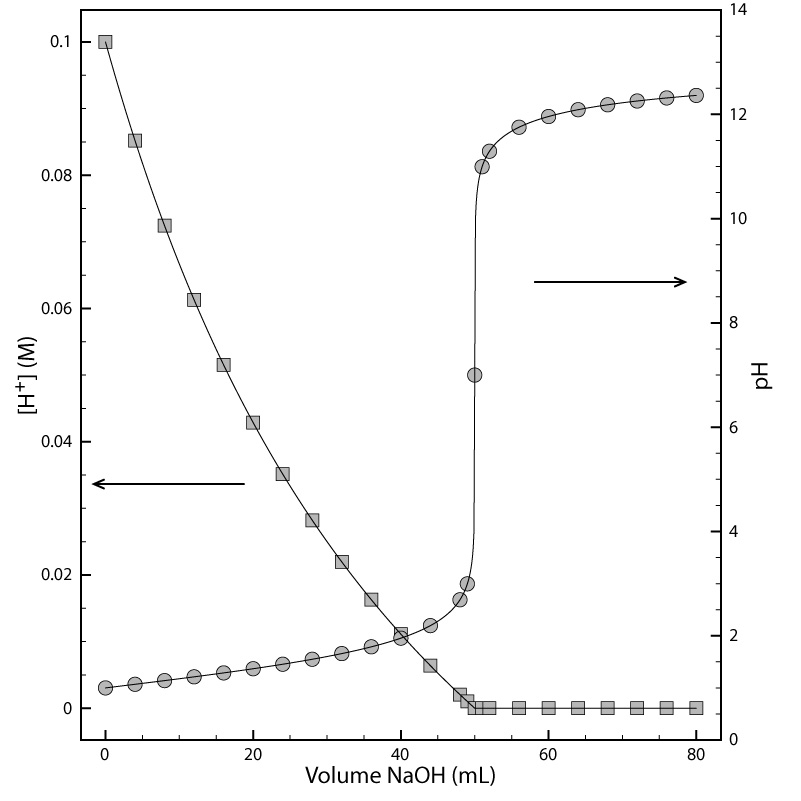
When the concentration of a species spans many orders of magnitude, it is difficulty to display how that species’ concentration changes during a chemical reaction. Such is the case here for the […]
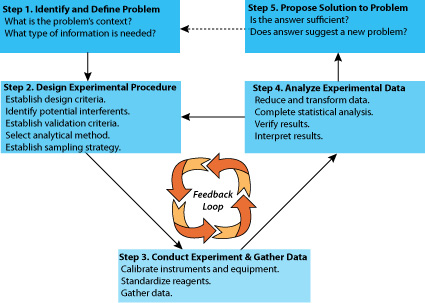
What is the analytical perspective? Many analytical chemists describe this perspective as an analytical approach to solving problems. Although there probably are as many descriptions of the analytical perspective as there are analytical […]
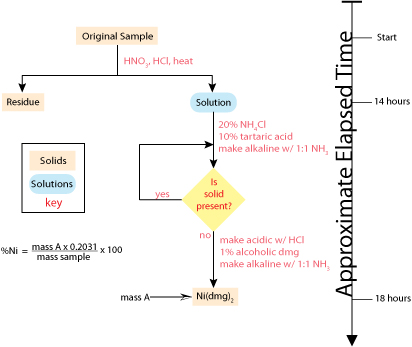
One distinction between analytical chemistry and chemical analysis is that analytical chemists work to improve and extend established analytical methods. For example, several factors complicate the quantitative analysis of nickel in ores, […]
The illustration below shows one method for making a standard addition. The volumetric flask on the left contains a portion of the sample, Vo, and the volumetric flask on the right contains […]
The photo below shows a typical example of a packed column for gas chromatography. This column is made from stainless steel and is 2 m long with an internal diameter of 3.2 […]
Shown below is a schematic diagram of a thermal conductivity detector. This is one of a matched pair of cells. The sample cell takes the carrier gas as it elutes from the […]
Shown below is a schematic diagram of a heated GC injector port for use with a packed column. The needle pierces a rubber septum and enters into the top of the column, […]
Shown at the top is a reagent blank (far left) and a set of five external standards for Cu2+ with concentrations increasing from left to right. Shown below the external standards is […]