Volumetric Glassware
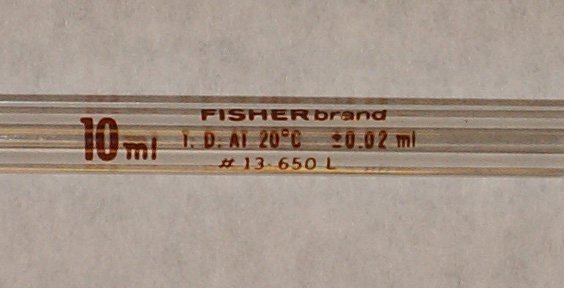
To measure volumes accurately and precisely, analytical chemists use volumetric pipets and volumetric flasks. A volumetric pipet is the choice when needing to deliver a specific volume. The photo below shows two […]

Explore resources, experiments, and teaching materials shared by the analytical sciences community.
To measure volumes accurately and precisely, analytical chemists use volumetric pipets and volumetric flasks. A volumetric pipet is the choice when needing to deliver a specific volume. The photo below shows two […]
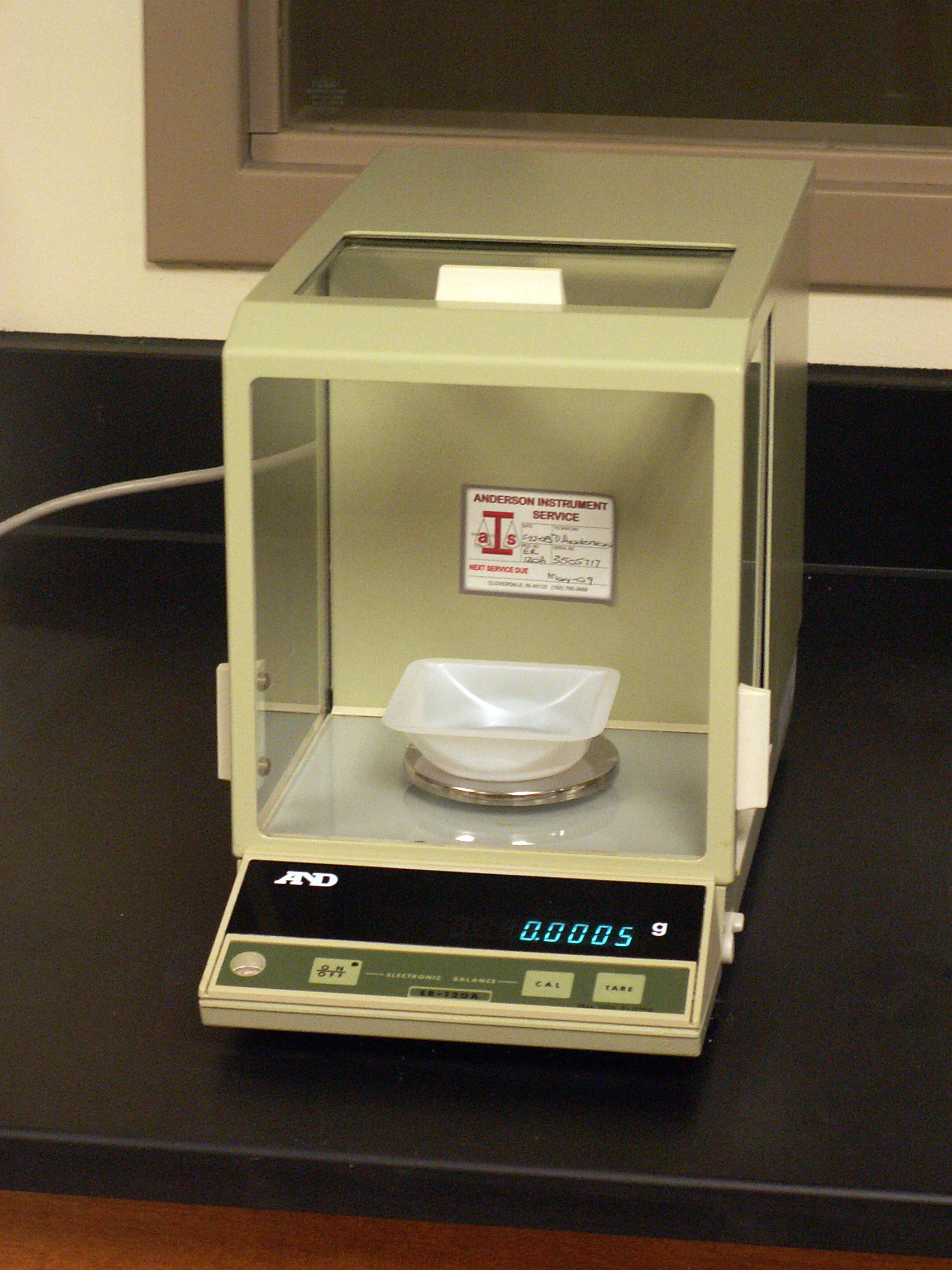
An electronic balance is the most common method for determining a sample’s mass. Here is how the electronic balance works. An electromagnet levitates the balance’s sample pan above a permanent cylindrical magnet. […]
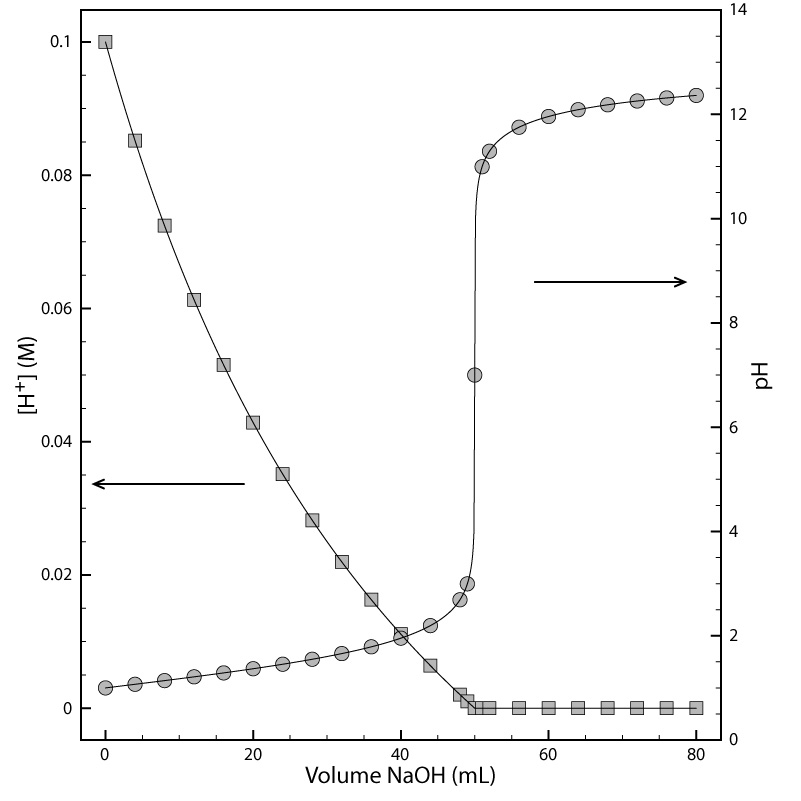
When the concentration of a species spans many orders of magnitude, it is difficulty to display how that species’ concentration changes during a chemical reaction. Such is the case here for the […]
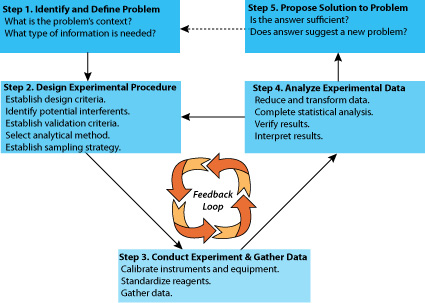
What is the analytical perspective? Many analytical chemists describe this perspective as an analytical approach to solving problems. Although there probably are as many descriptions of the analytical perspective as there are analytical […]
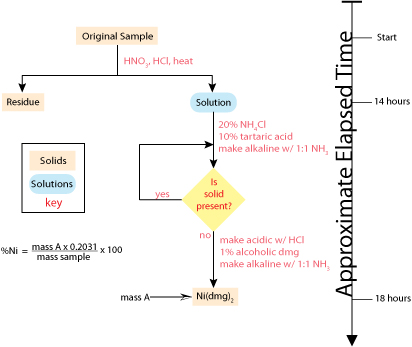
One distinction between analytical chemistry and chemical analysis is that analytical chemists work to improve and extend established analytical methods. For example, several factors complicate the quantitative analysis of nickel in ores, […]
This experiment describes the construction of a simple apparatus for effecting the electrodeposition of nickel onto a tared copper electrode. Results are compared to the determination of nickel by the classical gravimetric […]
Students determine the amount of cranberry juice (as a volume percent) in mixtures of cranberry juice and apple juice by measuring the absorption of mixtures and comparing to a calibration curve prepared […]
Food storage containers may contain micro-particles of Ag, which serves as an anti-microbial agent to limit the growth of molds, fungi, and other microorganisms. Students study the leeching ability of three solvents […]
The kinetics of the dephosphorylation of sodium p-nitrophenol using the enzyme bovine alkaline phosphatase is studied by measuring the reaction’s velocity spectrophotometrically as a function of the substrate’s concentration. The kinetic parameters […]
In this experiment students use diffusion-ordered NMR spectroscopy (DOSY) to determine the viscosity of a solution by measuring the diffusion coefficient (D) for a reference compound in solvents of known viscosity (η), […]
Using a flatbed scanner to measure the reflectance from samples of a white polyester fabric impregnated with linseed oil, students determine detergent efficiency. Scans of samples are stored as RGB (red, green, […]
Students determine the concentration of sodium sesquicarbonate in an alkaline laundry detergent though a combination of an acid-base titration and thermal gravimetry, both of the thermal decomposition and the decomposition by reaction […]