Showing 37–46 of 46 posts

Electrophoretic Separation

In chromatography, a separation occurs because there is a difference in the equilibrium partitioning of solutes between the mobile phase and the stationary phase. Equilibrium partitioning, however, is not the only basis […]
Chromatographic Separations

As illustrated below, in chromatography we pass a sample-free phase, which we call the mobile phase, over a second sample-free stationary phase that remains fixed in space. We inject or place the […]

Liquid-Liquid Extractions

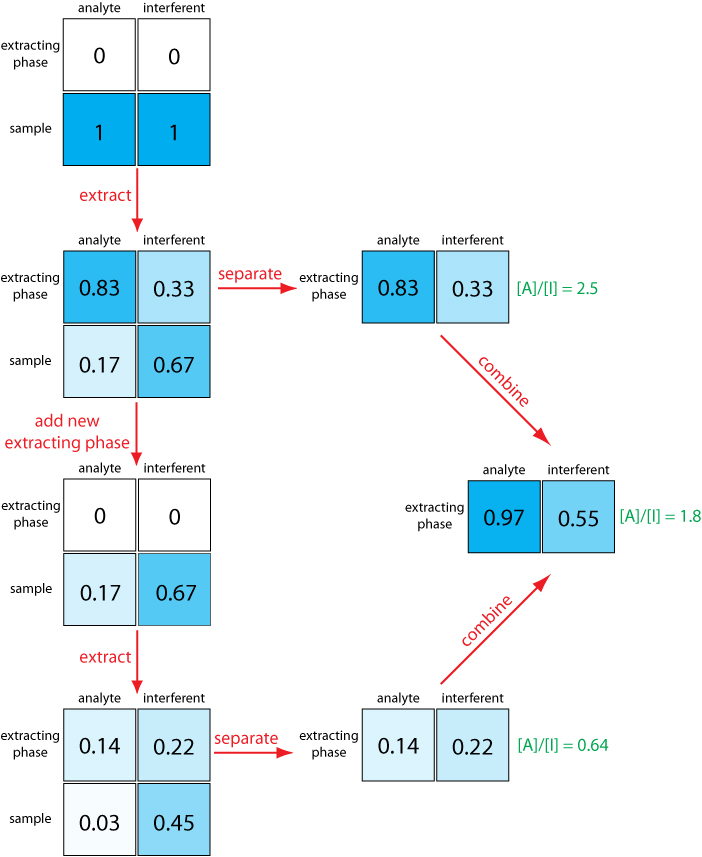
Shown here is an illustration outlining the progress of a traditional liquid–liquid extraction (LLE) using two identical extractions of a single sample with fresh portions of the extractant. The numbers give the […]

Purge-And-Trap Extraction

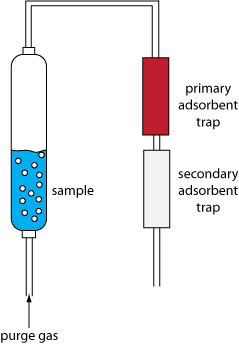
Schematic diagram of a purge-and-trap system for extracting volatile analytes. The purge gas releases the analytes, which subsequently collect in the primary adsorbent trap. The secondary adsorption trap is monitored for evidence […]

Soxhlet Extraction

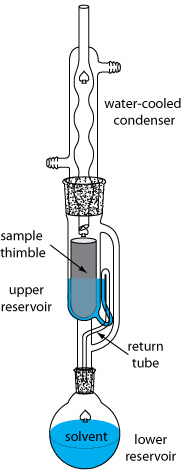
In a Soxhlet extraction, the extracting solvent is placed in the lower reservoir and heated to its boiling point. Solvent in the vapor phase moves upwards through the tube on the far […]

Solid-Phase Extraction

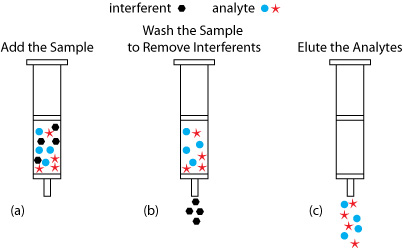
In a solid-phase extraction of a liquid sample, we pass the sample through a cartridge containing a solid adsorbent. A typical separation is illustrated here. Before adding the sample, the solid phase cartridge […]

Liquid-Liquid Extraction

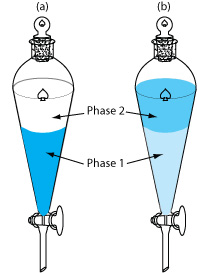
Illustration showing a liquid–liquid extraction using a separatory funnel: (a) before the extraction, 100% of the analyte is in phase 1; (b) after the extraction, most of the analyte is in phase […]

Separation by Sublimation

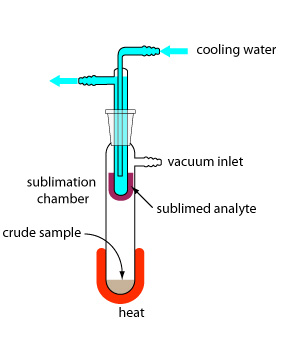
When a sample is a solid, sublimation may provide a useful method for separating an analyte from an interferent. The sample is heated at a temperature and pressure below the analyte’s triple […]

Distillation

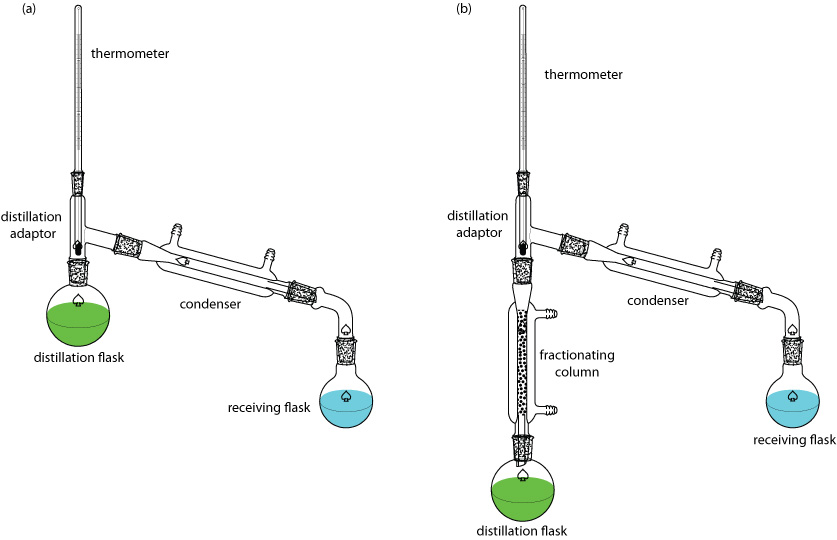
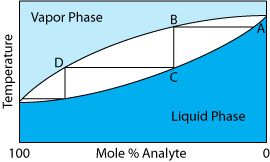
When an analyte and interferent are miscible liquids, a separation by distillation is possible if their boiling points are significantly different. The figure below shows the progress of a distillation as a […]