
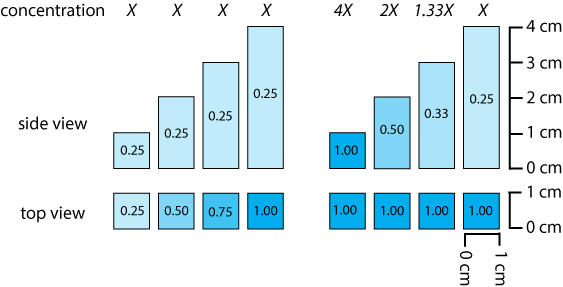
Introduction This on-line learning module introduces students to Beer’s law with particular attention to the relationships between absorbance, transmittance, and power, and to the fundamental, instrumental, and chemical limitations inherent in the […]
Active Learning Resources
Browse resources, explore categories, and discover materials contributed to the ASDL library.
Students use an acid-base titration simulator to explore the effect of different variables.
Students explore basic concepts of acid-base chemistry and buffers when completing this activity.
Self-study module on kinetics for chemical and biochemical analysis at the sophomore level. Covers first and second order reactions, Michaelis-Menten mechanism, instrumentation, and data analysis. The use of pseudo-first order kinetics for […]
Students explore basic concepts of electrochemistry including electrochemical cells and redox titrations.
After completing this laboratory activity, students will be able to: Design and execute statistically relevant experiments for measuring a suite of chemicals from treated plants; Collect, analyze, and interpret qualitative and quantitative […]
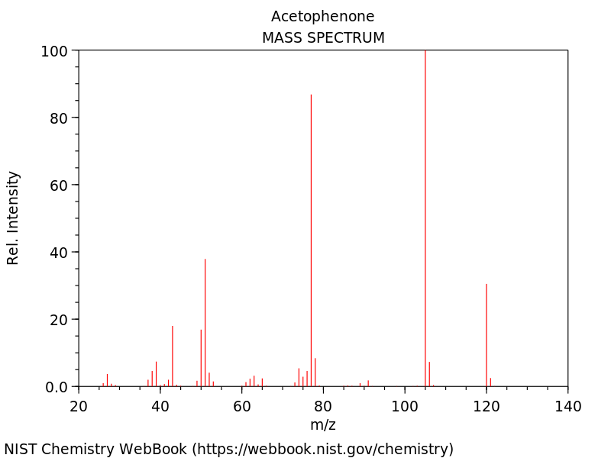
[vc_row][vc_column icons_position=”left”][vc_column_text] Introduction A series of collaborative learning activities and accompanying text that develop fundamental aspects of mass spectrometry. These activities are intended to be done in class by students working in […]
Students will learn to:
Describe the relationship between absorbance and transmittance.
Develop a proportional relationship between absorbance and concentration.
Account for the role of sample pathlength in absorbance measurements.
Determine the molar absorptivity of a compound based on its absorbance behavior according to Beer’s Law.
Construct a spectrum from absorbance measurements at various concentrations.
Students will learn to: Determine the pH at any point throughout an acid-base titration including the titration of:
A strong acid with a strong base
A strong base with a strong acid
A weak acid with a strong base
A weak base with a strong acid
Describe the general nature of the solution in terms of how to calculate pH for the following regions of an acid-base titration:
Region I: before any titrant added
Region II: partway to the equivalence point
Region III: at the equivalence point
Region IV: past the equivalence point
Compare how concentration and strength of an acid or base changes the appearance of a titration curve.
Students will learn to:
Identify a buffer solution.
Calculate the pH of a buffer solution.
Calculate the amount of reagents required to prepare a buffer solution.
Design an acid/base titration
Choose a proper acid/base indicator
Students will learn to:
Recall basic concepts about redox chemistry
Identifying oxidation and reduction
Identify the oxidizing and reducing agent in a redox reaction
Interpret the relative magnitudes of standard reduction potentials
Identify the cathode and anode in an electrochemical cell
Calculate the standard potential difference of an electrochemical cell
Decipher line notation representing an electrochemical cell
Apply the Nernst equation to nonstandard conditions
Relating potentials across multiple reference electrodes
An instructor’s guide to implementing a modular theme-based approach to the advanced analytical chemistry laboratory is provided. The guide provides information on student learning objectives, group dynamics, and grading, and provides examples […]