
Introduction A series of collaborative learning activities and accompanying text that develop fundamental aspects of electrochemistry and electrochemical methods of analysis. These activities are intended to be done in class by students […]
e. Voltammetric Methods
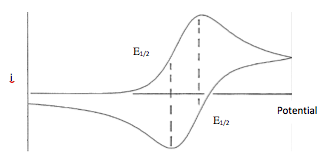
In this activity, students explore methods such as anodic stripping, linear sweep and cyclic voltammetry. There is also an associated text that explains the answers to the questions in the worksheets.
Introduction This Shiny app simulates cyclic voltammetry experiments using the computational method outlined in Gosser, D. K. Cyclic Voltammetry Simulation and Analysis of Reaction Mechanisms, VCH, New York, 1993 and in Brown, J. […]

Toxic trace metals are possible culprits for the ongoing deaths of large numbers of lesser flamingos at Lake Nakuru, Kenya. In this section we explore the possible role of heavy metals in these deaths and examine instrumental methods utilized to evaluate levels of copper, zinc, lead and chromium present in Lake Nakuru sediment and suspended solid samples. These methods include anodic stripping voltammetry (ASV), atomic spectroscopy, and x-ray fluorescence spectroscopy (XRF). Data sets are provided for each technique so that current levels can be calculated and compared to those contained in a report published in 1998.

Introduction These assignments are designed to be capstone activities at the end of units on figures of merit (such as sensitivity and LOD), acid-base equilibria, separations, spectroscopy, mass spectrometry, and electrochemistry. Each […]
Students will learn to:
Describe the role electrode size can play in cyclic voltammetry.
2. Practice interpretation of cyclic voltammetry data analysis.
3. Use the literature to analyze how microelectrodes are used in bioanalytical applications.
Students analyze an article on microelectrode in vivo electrochemistry in this activity.