
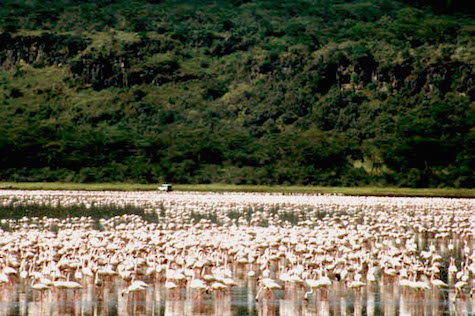
In the process of thinking about the problem of the Lake Nakuru flamingos, you will have the chance to apply knowledge you have gained in your chemistry coursework and to learn in greater detail important concepts related to modern chemical analysis.
22. Contextual Modules
Could toxic pesticides like DDT be responsible for the deaths of large numbers of lesser flamingos at Lake Nakuru, Kenya? While many organochlorine pesticides including DDT have been banned for decades in […]
Toxic trace metals are possible culprits for the ongoing deaths of large numbers of lesser flamingos at Lake Nakuru, Kenya. In this section we explore the possible role of heavy metals in these deaths and examine instrumental methods utilized to evaluate levels of copper, zinc, lead and chromium present in Lake Nakuru sediment and suspended solid samples. These methods include anodic stripping voltammetry (ASV), atomic spectroscopy, and x-ray fluorescence spectroscopy (XRF). Data sets are provided for each technique so that current levels can be calculated and compared to those contained in a report published in 1998.
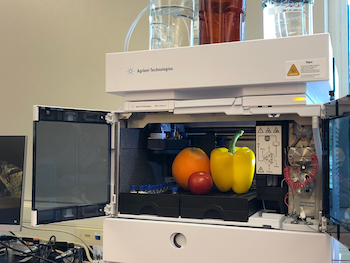
Introduction This module introduces students to the topic of sample preparation using a variety of real-world examples from pharmaceutical analysis to environmental analysis. Liquid-liquid extraction, solid phase extraction, QuEChERS, derivatization in chromatography […]
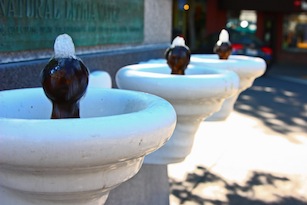
Introduction Can the most prevalent inorganic ions be determined in Lithia water using a representative cross-section of the analytical techniques (e.g. titrimetry, potentiometry, spectroscopy) covered in a typical quantitative analysis course? The […]
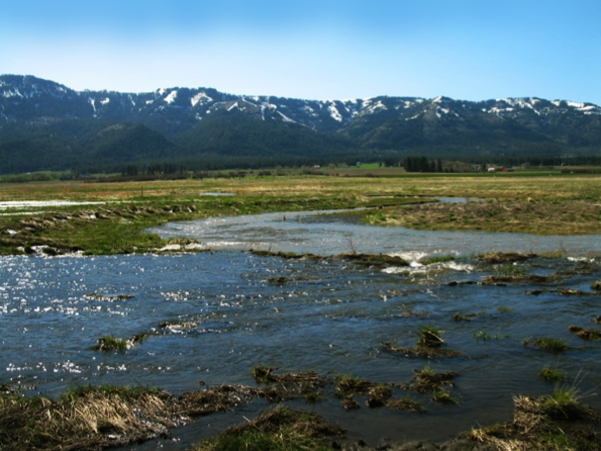
[vc_row][vc_column icons_position=”left”][vc_column_text] Introduction This module provides a context for introducing fundamental techniques used in chemical analysis (spectrophotometry, atomic absorbance spectroscopy and ion selective electrodes) along with considerations about sampling and sample preservation. […]
Introduction This module provides a real world context for introducing fundamental quantitative techniques (pH, Ion Selective Electrodes, Ion chromatography, and Titrimery) used in chemical analysis of water samples. Using active learning pedagogy, […]
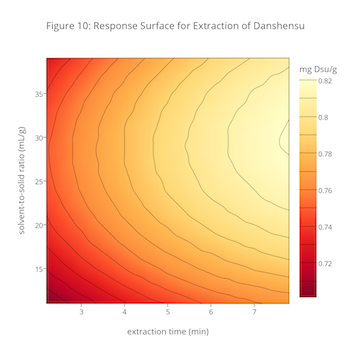
Introduction This module introduces students to the process of developing an analytical method using, as a case study, the quantitative analysis of eight analytes in the medicinal plant Danshen using a combination […]
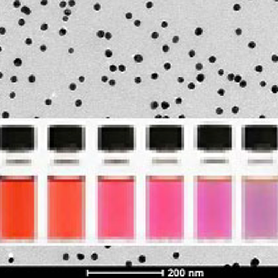
Introduction The module is designed as a sequence of class activities and provides a set of experimental data (TEM images, size and size distribution analyses, and absorbance vs. concentration data) that can […]