
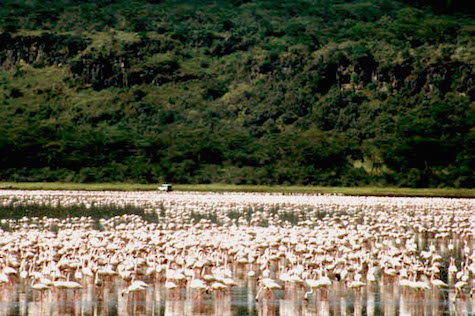
Toxic trace metals are possible culprits for the ongoing deaths of large numbers of lesser flamingos at Lake Nakuru, Kenya. In this section we explore the possible role of heavy metals in these deaths and examine instrumental methods utilized to evaluate levels of copper, zinc, lead and chromium present in Lake Nakuru sediment and suspended solid samples. These methods include anodic stripping voltammetry (ASV), atomic spectroscopy, and x-ray fluorescence spectroscopy (XRF). Data sets are provided for each technique so that current levels can be calculated and compared to those contained in a report published in 1998.
b. Sample preparations
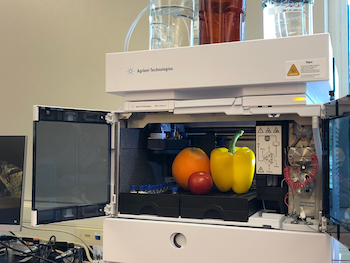
Introduction This module introduces students to the topic of sample preparation using a variety of real-world examples from pharmaceutical analysis to environmental analysis. Liquid-liquid extraction, solid phase extraction, QuEChERS, derivatization in chromatography […]
Students will learn to:
dentify interfering matrix components
Be familiar with different extraction processes
Understand the derivatization process for increasing sample volatility
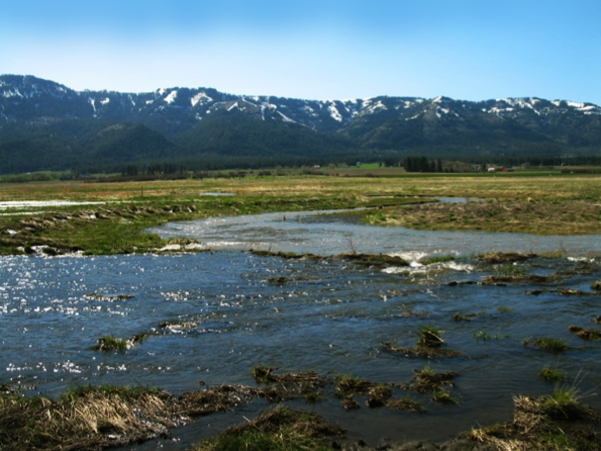
[vc_row][vc_column icons_position=”left”][vc_column_text] Introduction This module provides a context for introducing fundamental techniques used in chemical analysis (spectrophotometry, atomic absorbance spectroscopy and ion selective electrodes) along with considerations about sampling and sample preservation. […]
Introduction This module provides a real world context for introducing fundamental quantitative techniques (pH, Ion Selective Electrodes, Ion chromatography, and Titrimery) used in chemical analysis of water samples. Using active learning pedagogy, […]
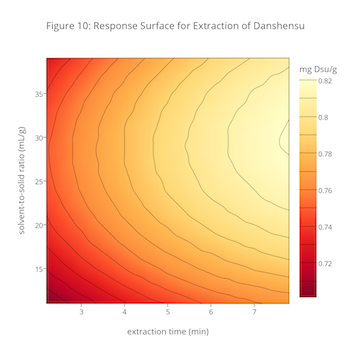
Introduction This module introduces students to the process of developing an analytical method using, as a case study, the quantitative analysis of eight analytes in the medicinal plant Danshen using a combination […]
In this activity, students are given an analysis problem and asked to develop plans for sampling and sample preparation.