
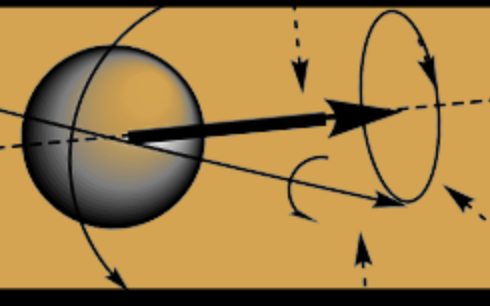
Introduction The goal of this unit is to develop introductory concepts on nuclear magnetic resonance (NMR) spectroscopy that are most relevant for undergraduate chemistry majors. Development of the concepts of NMR is […]
Active Learning Resources
Browse resources, explore categories, and discover materials contributed to the ASDL library.
An online text on the basics of Nuclear Magnetic Resonance (NMR) spectroscopy. The text contains information especially appropriate for the novice, but topics are treated at sufficient depth to be useful for […]
Quantitative nuclear magnetic resonance (Q-NMR) measurements are especially useful for analysis of complex samples where high specificity is needed or when a pure standard of the analyte is not available. Often the […]
This module provides an introduction to Atomic Emission Spectroscopy (AES). AES is a broad area that includes several analytical chemistry techniques focused on elemental analysis, the identification, quantification, and (sometimes) speciation of […]
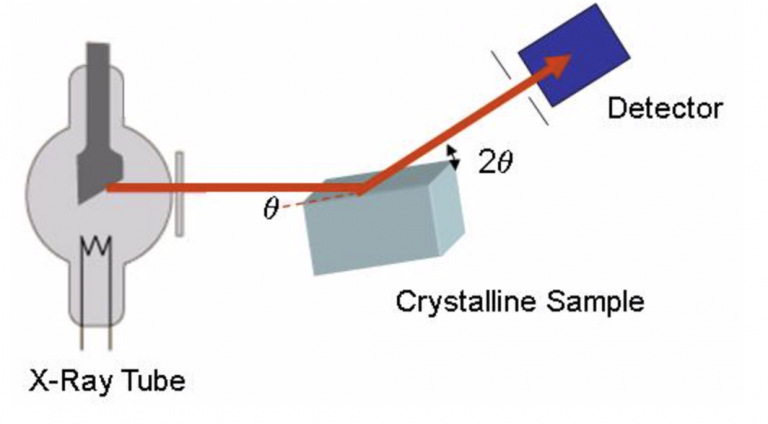
[vc_row][vc_column icons_position=”left”][vc_column_text]This module provides an introduction to X-ray Diffraction (XRD). XRD is a versatile, non-destructive technique that reveals detailed information about the chemical composition and crystallographic structure of materials. It is utilized in a variety of […]

Introduction This guided research project explores the chemistry and impact of phosphorous on a fresh water system of lakes connected by a river in south-central Wisconsin. Students begin this project by comparing […]
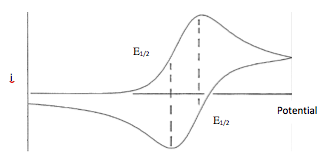
Introduction A series of collaborative learning activities and accompanying text that develop fundamental aspects of electrochemistry and electrochemical methods of analysis. These activities are intended to be done in class by students […]
Students explore basic aspects of atomic spectroscopy including absorption and emission. Flame and graphite furnace AA are covered. ICP emission spectroscopy is covered. The importance of matrix effects is developed. There is an associated text that explains the answers to the questions on the worksheet.
Students explore basic aspects of luminescence spectroscopy including energy level diagrams and the processes of fluorescence and phosphorescence. Processes that result in fluorescence quenching are also covered. There is an associated text that explains the answers to the questions on the worksheet.
Students explore basic aspects of infrared spectroscopy including the operation of an FT-IR. There is an associated text that explains the answers to the questions on the worksheet.
Students explore basic aspects of UV/Vis spectroscopy including effects of conjugation, non-bonding electrons and solvent on the observed spectrum. There is an associated text that explains the answers to the questions on the worksheet.
Students explore basic aspects of spectroscopy including aspects of electromagnetic radiation, Beer’s Law and instrumental components. There is an associated text that explains the answers to the questions on the worksheet.