Certificate of Analysis
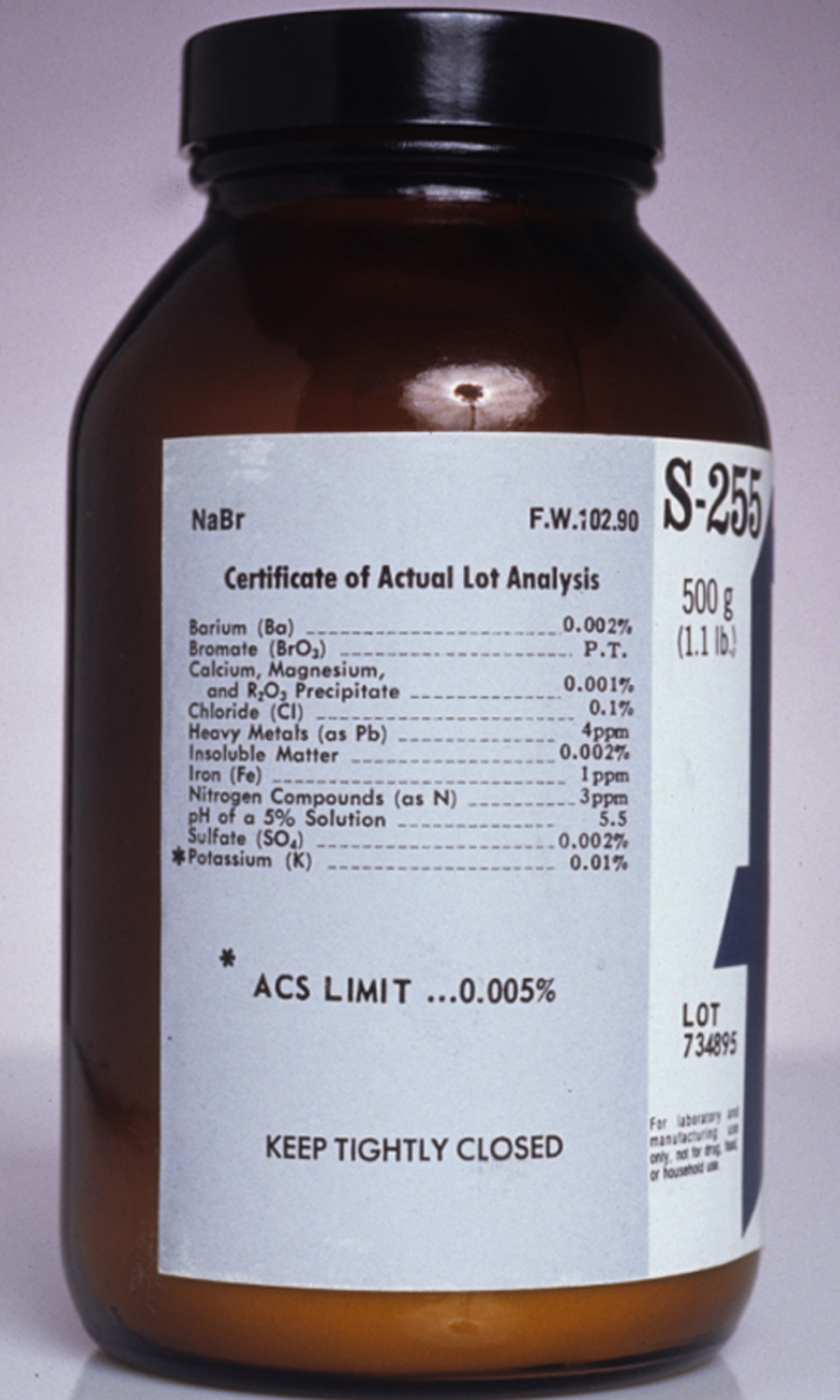
When a manufacturer lists a chemical as ACS Reagent Grade, they must demonstrate that it conforms to specifications set by the American Chemical Society (ACS). For example, the ACS specifications for NaBr […]

When a manufacturer lists a chemical as ACS Reagent Grade, they must demonstrate that it conforms to specifications set by the American Chemical Society (ACS). For example, the ACS specifications for NaBr […]
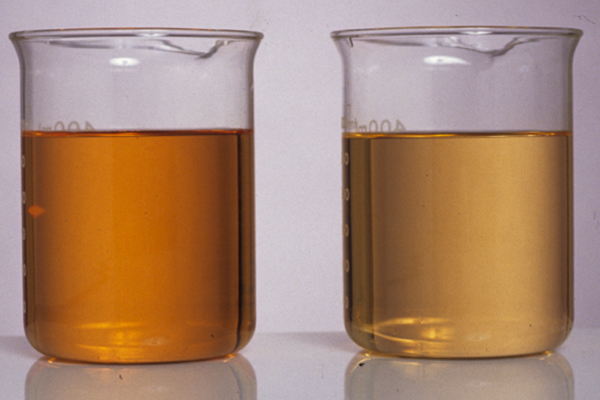
The effect of a inert salt on a reaction’s equilibrium position is shown by the solutions in these two beakers. The beaker on the left contains equal volumes of 1.0 mM FeCl3 […]
Analyzing a sample generates a chemical or physical signal proportional to the amount of analyte in the sample. This signal may be anything we can measure, such as mass or absorbance. Consider […]
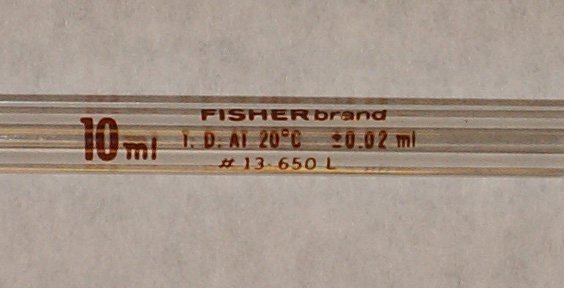
To measure volumes accurately and precisely, analytical chemists use volumetric pipets and volumetric flasks. A volumetric pipet is the choice when needing to deliver a specific volume. The photo below shows two […]
The photo below shows a typical example of a packed column for gas chromatography. This column is made from stainless steel and is 2 m long with an internal diameter of 3.2 […]
Shown at the top is a reagent blank (far left) and a set of five external standards for Cu2+ with concentrations increasing from left to right. Shown below the external standards is […]
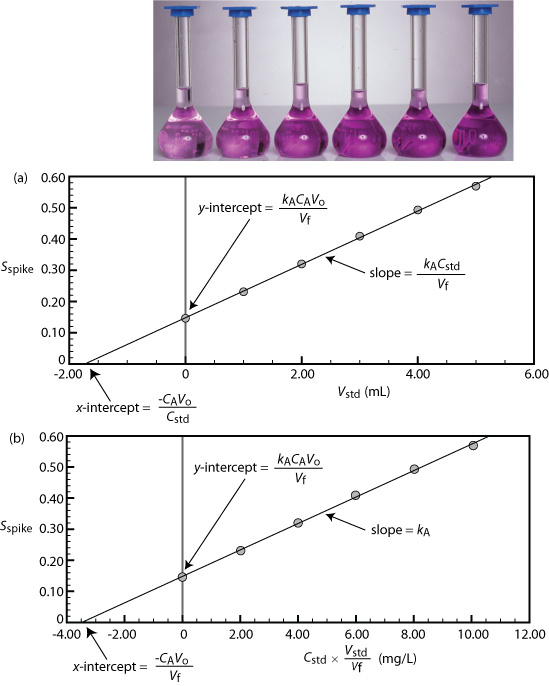
Shown at the top is a set of six standard additions for the determination of Mn2+. The flask on the left is a 25.00-mL sample diluted to 50.00 mL. The remaining flasks […]