Method of Continuous Variations
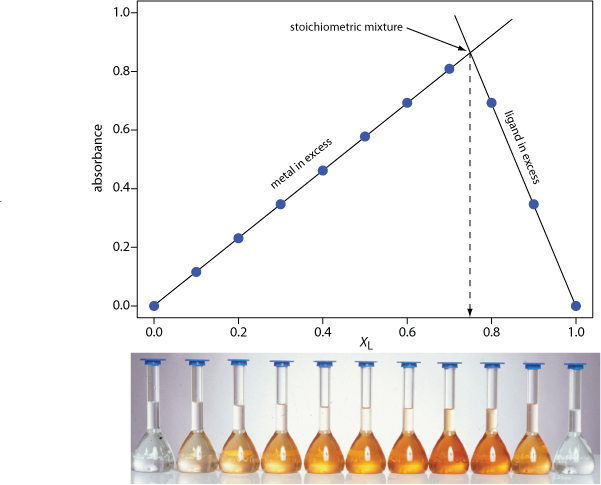
The method of continuous variations, also called Job’s method, is used to determine the stoichiometry of a metal-ligand complex. In this method we prepare a series of solutions such that the total […]

The method of continuous variations, also called Job’s method, is used to determine the stoichiometry of a metal-ligand complex. In this method we prepare a series of solutions such that the total […]
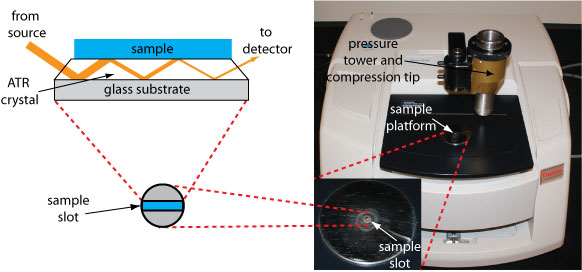
The illustration below shows an FT-IR spectrometer equipped with a diamond ATR sample cell. The inserts show a close-up photo of the sample platform, a sketch of the ATR’s sample slot, and […]
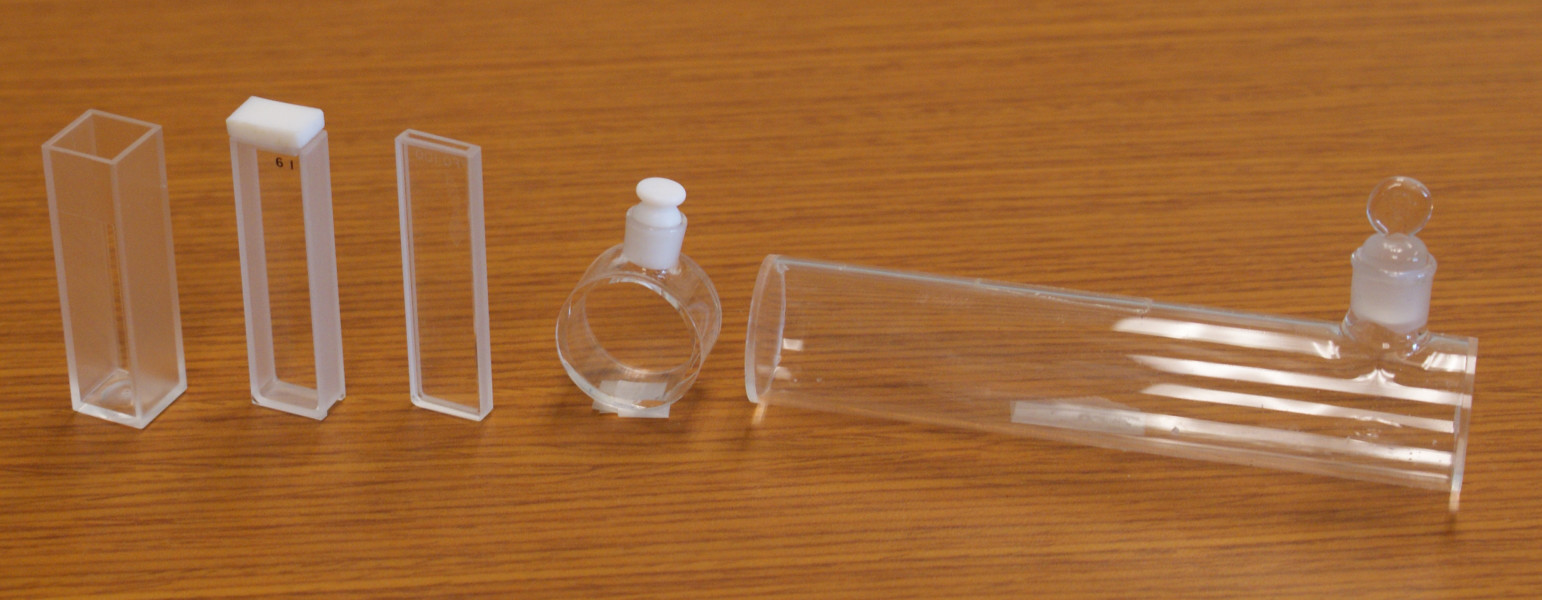
The photo below shows several examples of sample cells for UV/Vis spectroscopy. From left to right (with path lengths in parentheses): rectangular plastic cuvette (10.0 mm), rectangular quartz cuvette (5.000 mm), rectangular […]
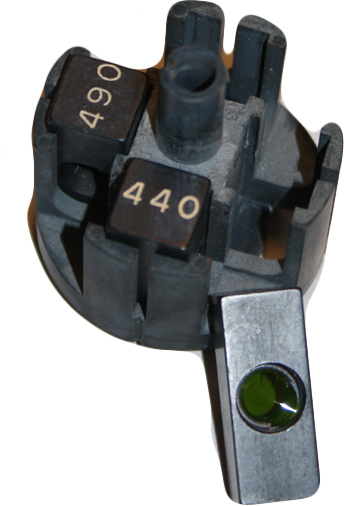
The simplest method for isolating a narrow band of radiation is to use an absorption filter, which work by selectively absorbing radiation from one or more regions of the electromagnetic spectrum. A […]
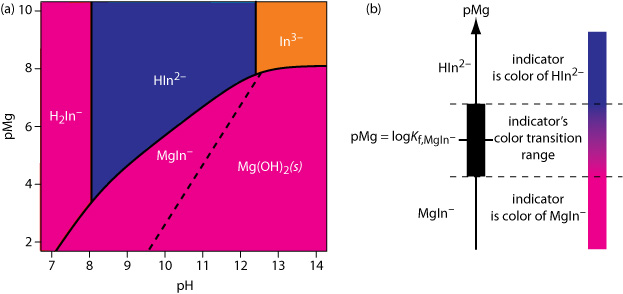
Most indicators for complexation titrations are organic dyes—known as metallochromic indicators—that form stable complexes with metal ions. The indicator, Inm–, is added to the titrand’s solution where it forms a stable complex […]
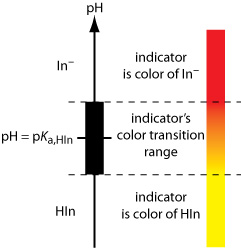
The illustration below shows the relationship between pH and an indicator’s color. The ladder diagram defines pH values where each of the indicator’s two forms the weak acid form, HIn, which in […]
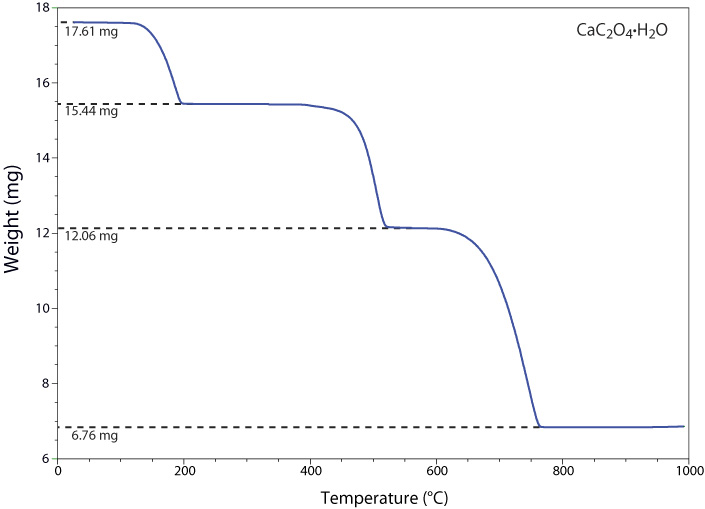
In a thermogravimetric analysis we measure the mass of a sample while heating the sample over time. The top photo shows a typical thermogravimetric analyzer and the bottom photo shows a close-up […]
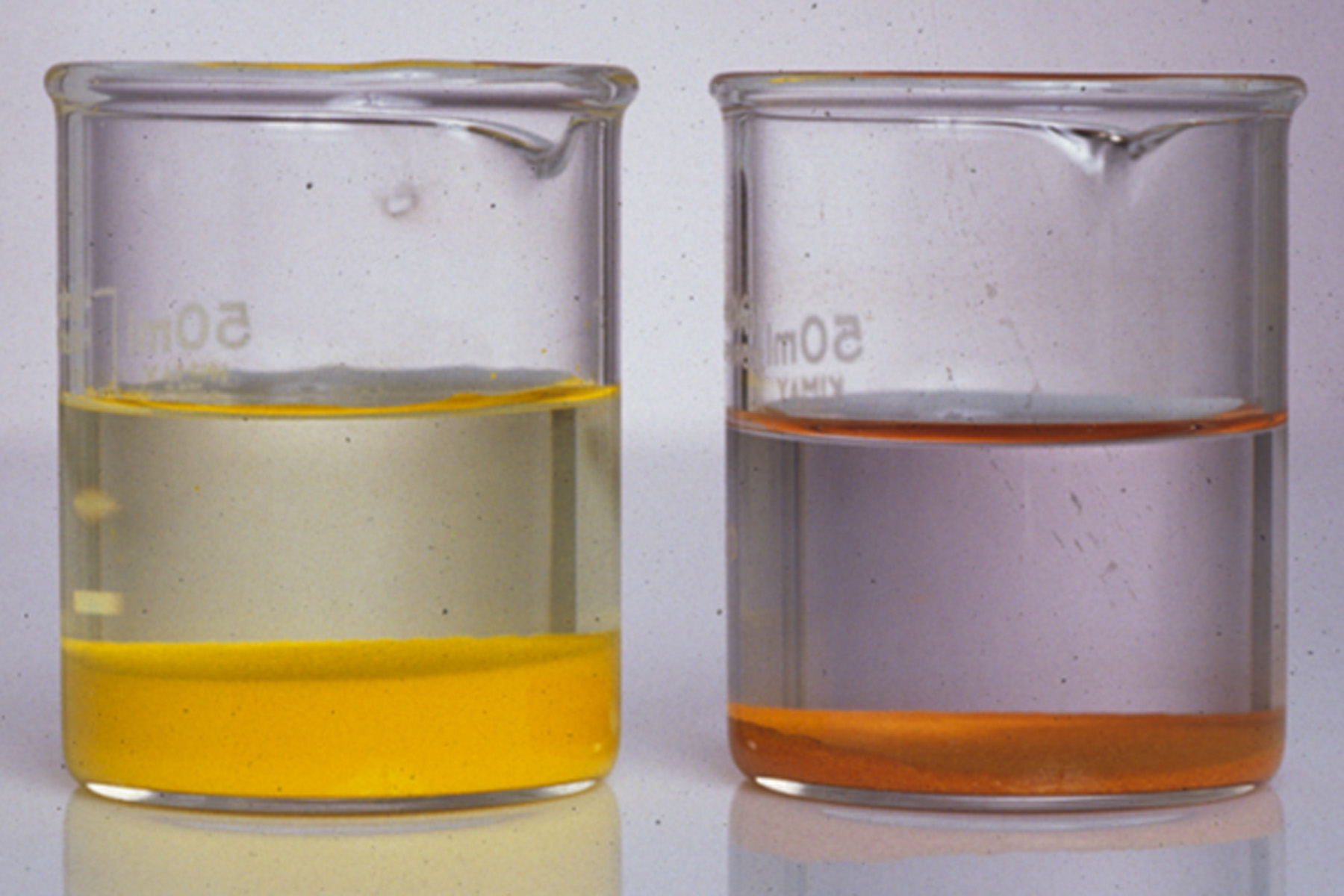
Two precipitates of PbCrO4 are shown in this photo. The precipitate in the beaker on the left was formed by pouring quickly a solution 0.1 M Pb(NO3)2 into a solution of 0.1 M […]
Mixing solutions of 1.5 M KNO3 and 1.5 M HClO4 produces a white precipitate of KClO4. If permanganate ions, MnO4–, are present, an inclusion of KMnO4 is possible. Impure precipitates of KClO4 […]
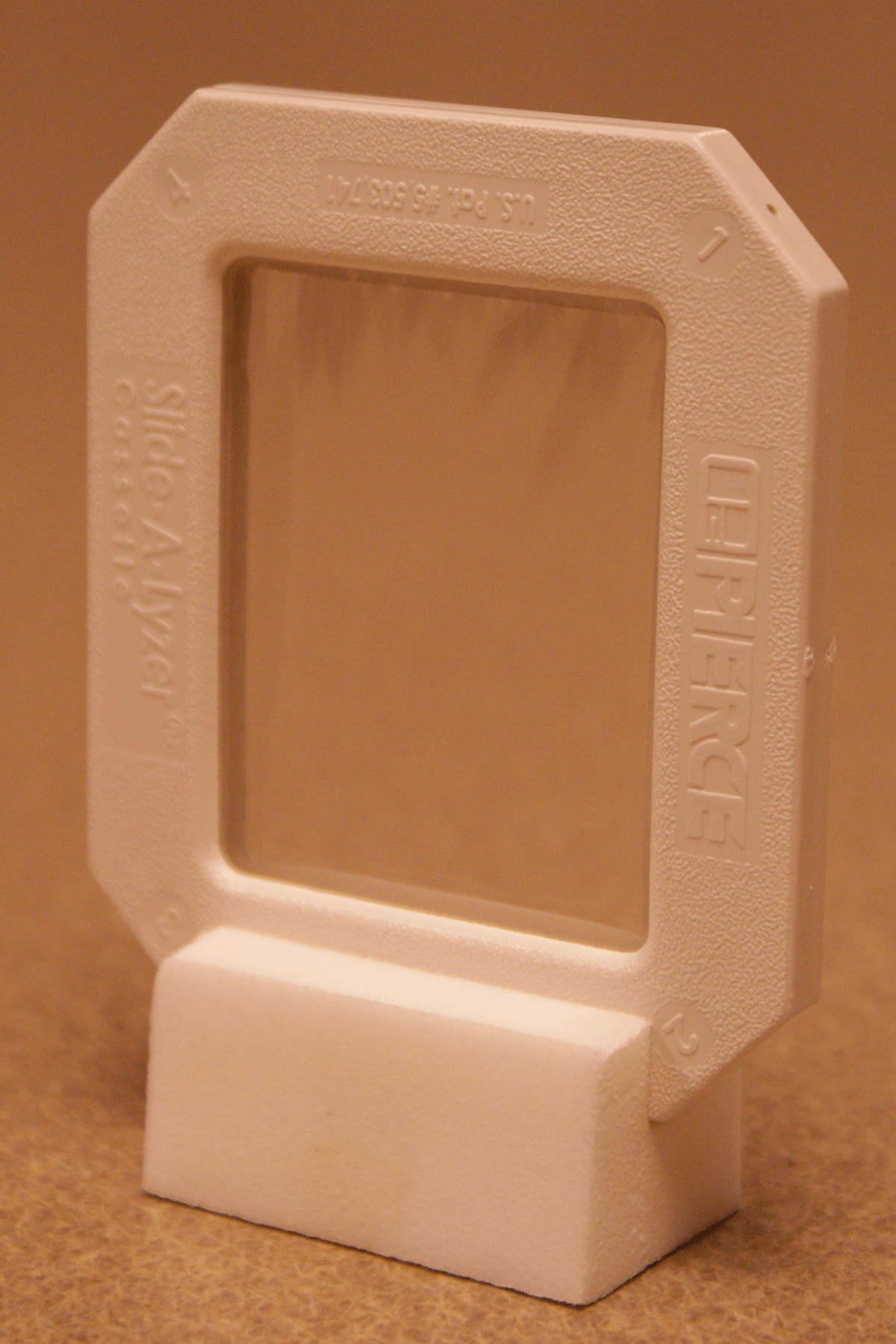
Photo of a dialysis cassette used to separate analytes from interferents based on size. The dialysis membrane in this unit has a molecular weight cut-off of 10,000 g/mol. Two sheets of the […]
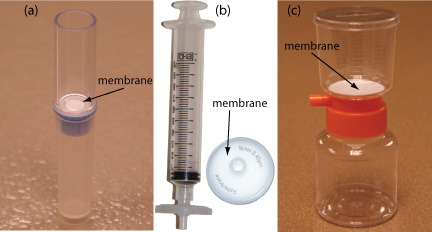
Three types of membrane filters are used to separate an analyte from interfering species that may be present in the sample solution. Figure (a) shows a centrifugal filter for concentrating and desalting […]
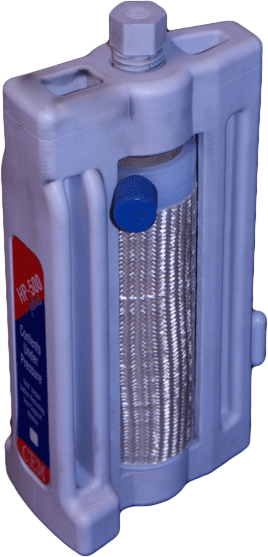
One method for bringing a sample into solution is a chemical digestion, often aided by heating the sample and the digesting solution. Many digestions are now carried out in a closed container […]