Showing 121–132 of 270 Resources

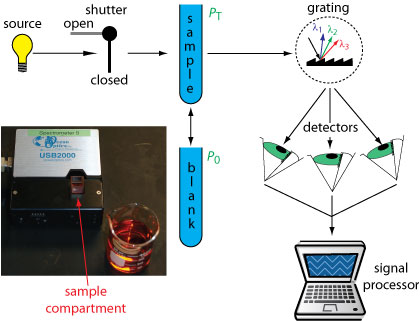
Diode Array Spectrometer

The illustration here shows a schematic diagram of a diode array spectrophotometer, in which we replace a single photomultiplier detector with an array of photodiodes. The source radiation passes through the sample and is […]
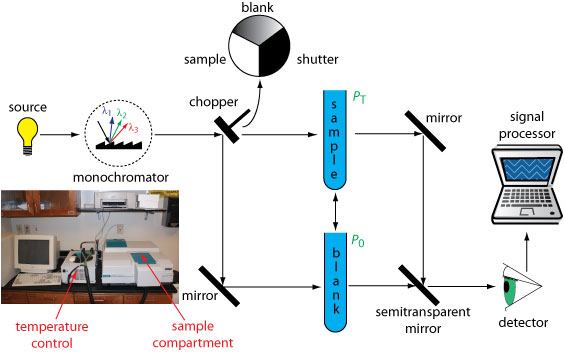
Double-Beam Spectrophotometer

The illustration below shows a diagram of a scanning, double-beam spectrophotometer. A chopper directs the source’s radiation, using a transparent window to pass radiation to the sample and a mirror to reflect […]

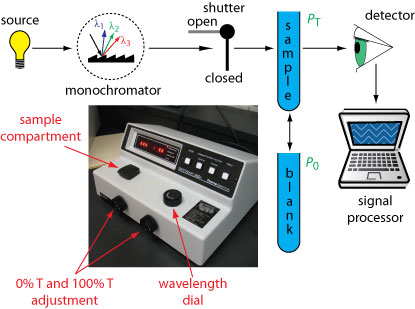
Single-Beam Spectrophotometer

The illustration here shows a diagram of a single-beam spectrophotometer that uses a monochromator to select the wavelength. The analyst manually selects the wavelength by adjusting the wavelength dial. Battery-operated, hand-held single-beam spectrophotometers […]

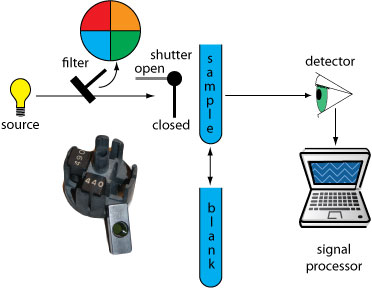
Filter Photometer

The illustration below is a diagram of a simple filter photometer, which uses an absorption filter (shown here) or interference filter to isolate a band of radiation. The analyst either inserts a removable filter […]

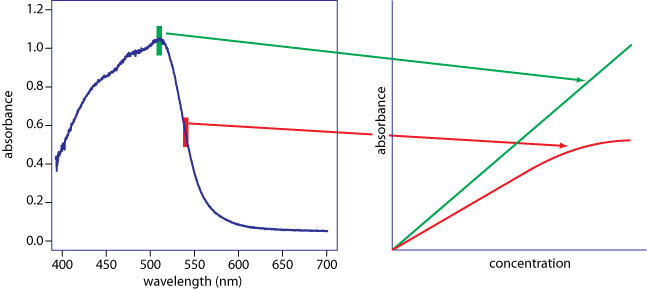
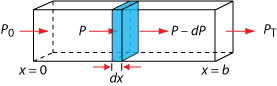
Beer’s Law

Absorbance is the more common unit for expressing the attenuation of radiation because it is a linear function of the analyte’s concentration. When monochromatic electromagnetic radiation passes through an infinitesimally thin layer of […]

Transmittance

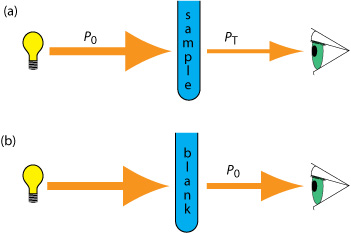
As light passes through a sample, its power decreases as some of it is absorbed. This attenuation of radiation is described quantitatively T = PT/Po where T is transmittance and PT and Po are, […]

Atomic Spectra

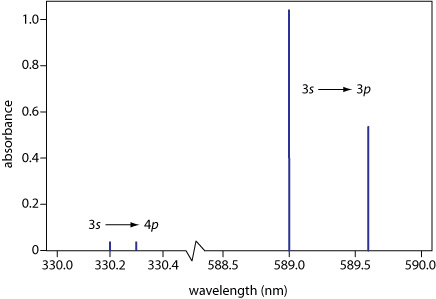
The energy of ultraviolet and visible electromagnetic radiation is sufficient to cause a change in an atom’s valence electron configuration. Sodium, for example, has a single valence electron in its 3s atomic […]

Infrared Spectra

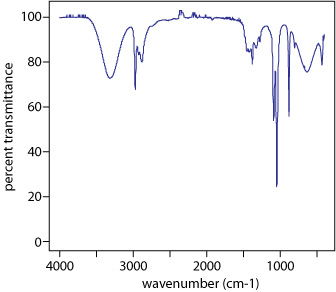
The illustration here shows two electronic energy levels (E0 and E1), each with five vibrational energy levels (ν0–ν4). Absorption of ultraviolet and visible radiation leads to a change in the analyte’s electronic energy […]

Photomultiplier Detector

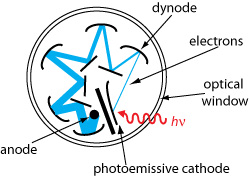
A photomultiplier contains a photosensitive surface that absorbs radiation in the ultraviolet, visible, or near IR, producing an electrical current proportional to the number of photons reaching the photomultiplier. As shown here, […]