Separation by Sublimation
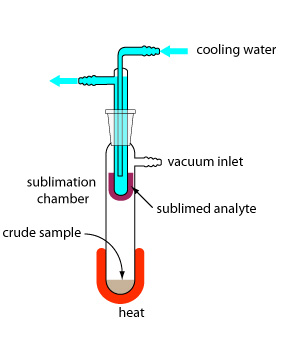
When a sample is a solid, sublimation may provide a useful method for separating an analyte from an interferent. The sample is heated at a temperature and pressure below the analyte’s triple […]

Explore resources, experiments, and teaching materials shared by the analytical sciences community.
When a sample is a solid, sublimation may provide a useful method for separating an analyte from an interferent. The sample is heated at a temperature and pressure below the analyte’s triple […]
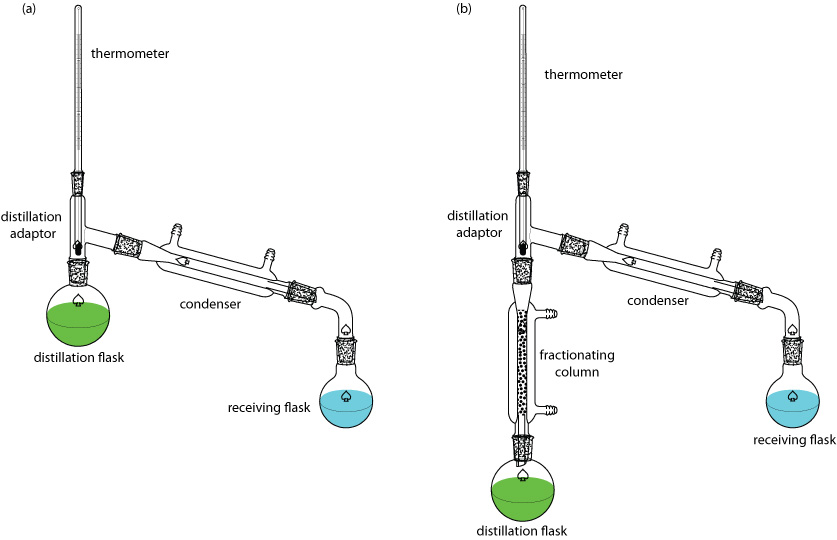
Two experimental set-ups for distillations are shown in this figure. The simple distillation apparatus shown on the left does not produce a very efficient separation, and is useful for separating a volatile […]
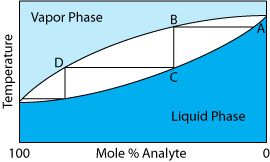
When an analyte and interferent are miscible liquids, a separation by distillation is possible if their boiling points are significantly different. The figure below shows the progress of a distillation as a […]
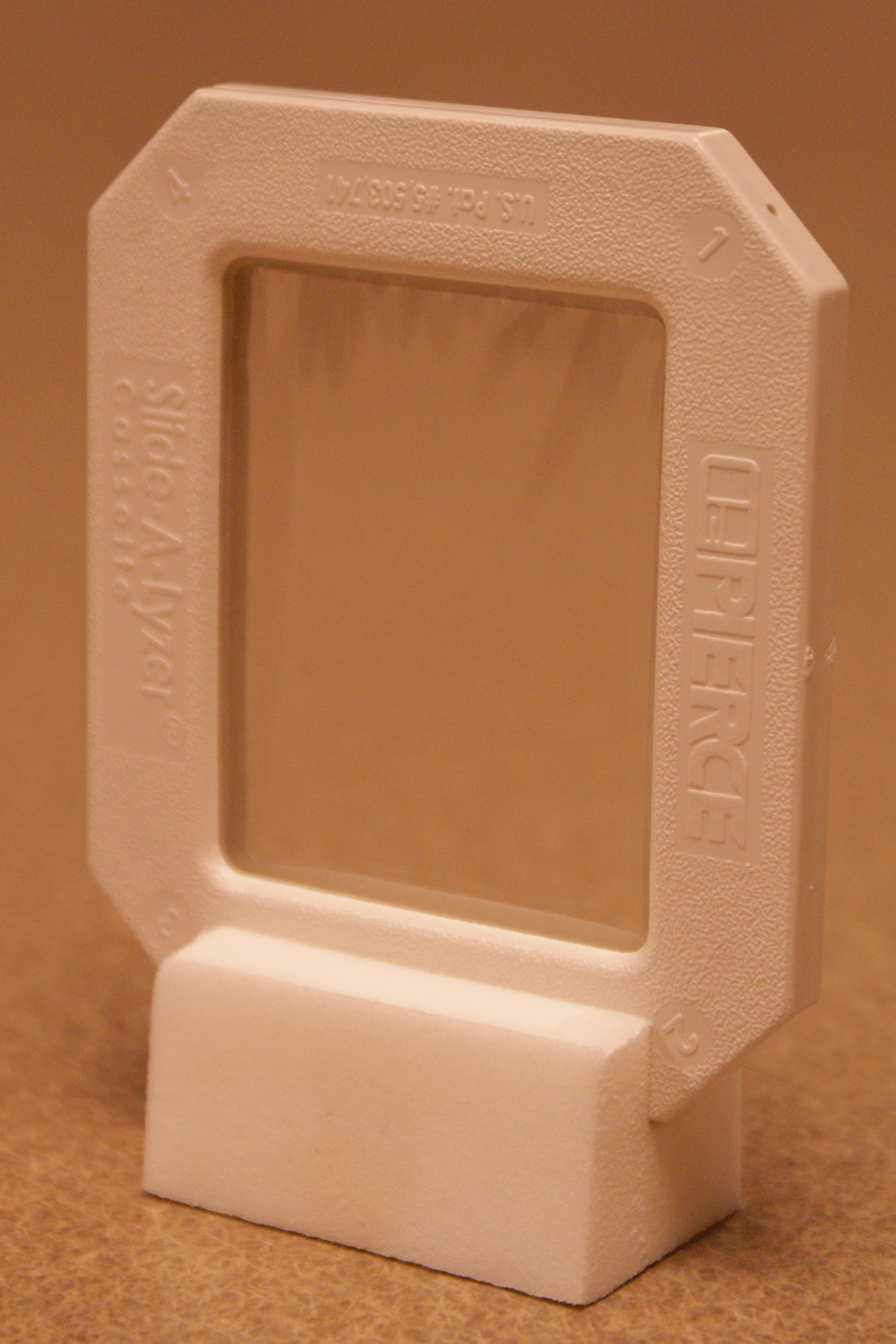
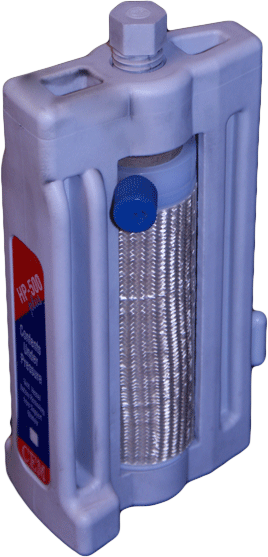
Photo of a dialysis cassette used to separate analytes from interferents based on size. The dialysis membrane in this unit has a molecular weight cut-off of 10,000 g/mol. Two sheets of the […]
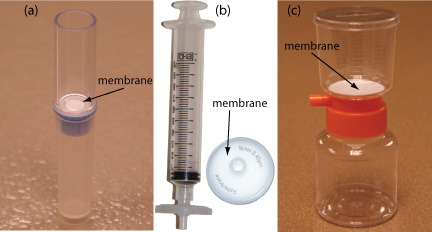
Three types of membrane filters are used to separate an analyte from interfering species that may be present in the sample solution. Figure (a) shows a centrifugal filter for concentrating and desalting […]
One method for bringing a sample into solution is a chemical digestion, often aided by heating the sample and the digesting solution. Many digestions are now carried out in a closed container […]
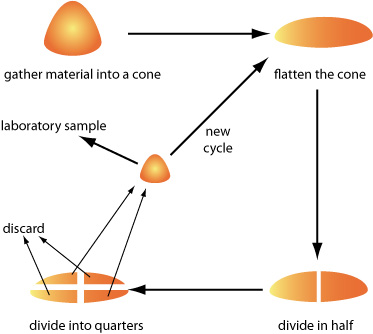
For a heterogeneous material consisting of large particulates, the original (or gross) sample may be too large to analyze. For example, a Ni-bearing ore with an average particle size of 5 mm […]
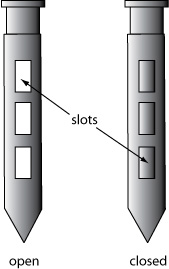
A sample thief is used for sampling smaller particulate materials, such as powders. A typical sample thief consists of two tubes that are nestled together. Each tube has one or more slots […]
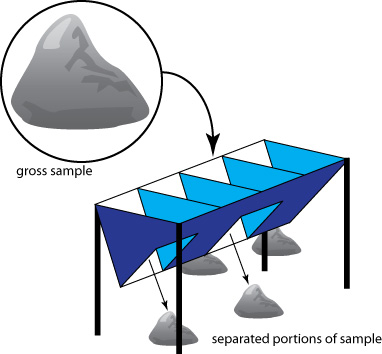
For particulate materials, particle size often determines the sampling method. Larger particulate solids, such as ores, are sampled using a riffle, which is a trough containing an even number of compartments. Because […]
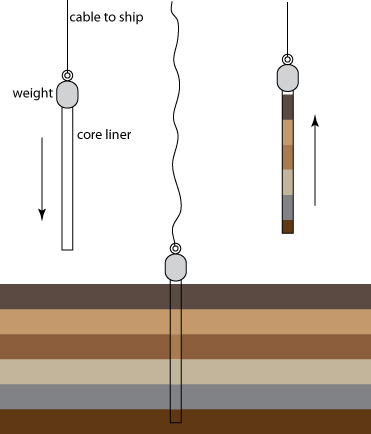
This figure shows a schematic diagram of a gravity corer in operation. The corer’s weight is sufficient to penetrate into the sediment to a depth of approximately 2 m. Flexible metal leaves […]
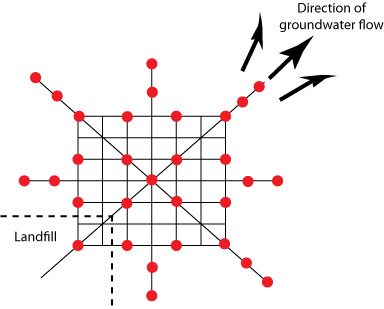
This figure shows a systematic–judgmental sampling plan for monitoring the leaching of pollutants from a landfill. The sampling sites, shown as red dots (•), are on a systematic grid that straddles the […]
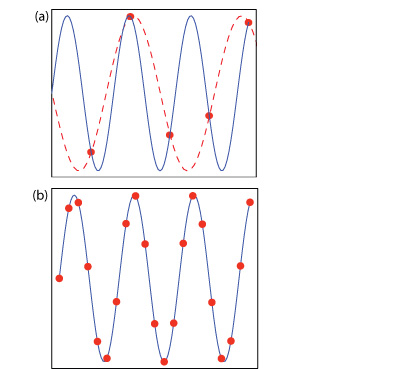
According to the Nyquist theorem, to accurately determine a periodic signal’s true frequency, we must sample the signal at least twice during each cycle or period. If we collect samples at an […]