
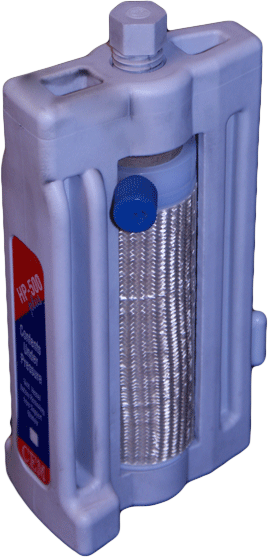
One method for bringing a sample into solution is a chemical digestion, often aided by heating the sample and the digesting solution. Many digestions are now carried out in a closed container using microwave radiation as the source of energy (top photo). Vessels for microwave digestion are manufactured using Teflon (or some other fluoropolymer) or fused silica (bottom two photos). Both materials are thermally stable, chemically resistant, transparent to microwave radiation, and capable of withstanding elevated pressures. A typical microwave digestion vessel consists of an insulated vessel body and a cap with a pressure relief valve (the blue cap in the middle photo). The vessels are placed in a microwave oven that typically accommodates 6–14 vessels, and microwave energy is controlled by monitoring the temperature or pressure within one of the vessels.
Microwave Digestion


About the Author

David Harvey
David T. Harvey is a Professor Emeritus of Chemistry and Biochemistry at DePauw University in Greencastle, Indiana, where he has been a dedicated faculty member since 1986. Over his nearly four-decade career, Dr…
View contributions