
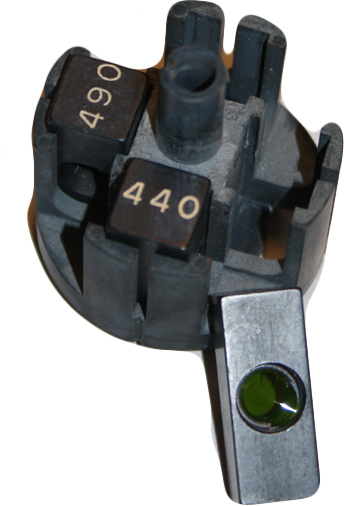
The simplest method for isolating a narrow band of radiation is to use an absorption filter, which work by selectively absorbing radiation from one or more regions of the electromagnetic spectrum. A simple example of an absorption filter is a piece of colored glass or film, as shown below. A green filter, for example, absorbs blue light (centered around 430 nm) and red light (centered around 700 nm), leaving green light centered at 550 nm to pass through. Commercially available absorption filters provide effective bandwidths of 30–250 nm, although the throughput may be only 10% of the source’s emission intensity at the low end of this range.
Wavelength Selection Using an Absorption Filter


About the Author

David Harvey
David T. Harvey is a Professor Emeritus of Chemistry and Biochemistry at DePauw University in Greencastle, Indiana, where he has been a dedicated faculty member since 1986. Over his nearly four-decade career, Dr…
View contributions