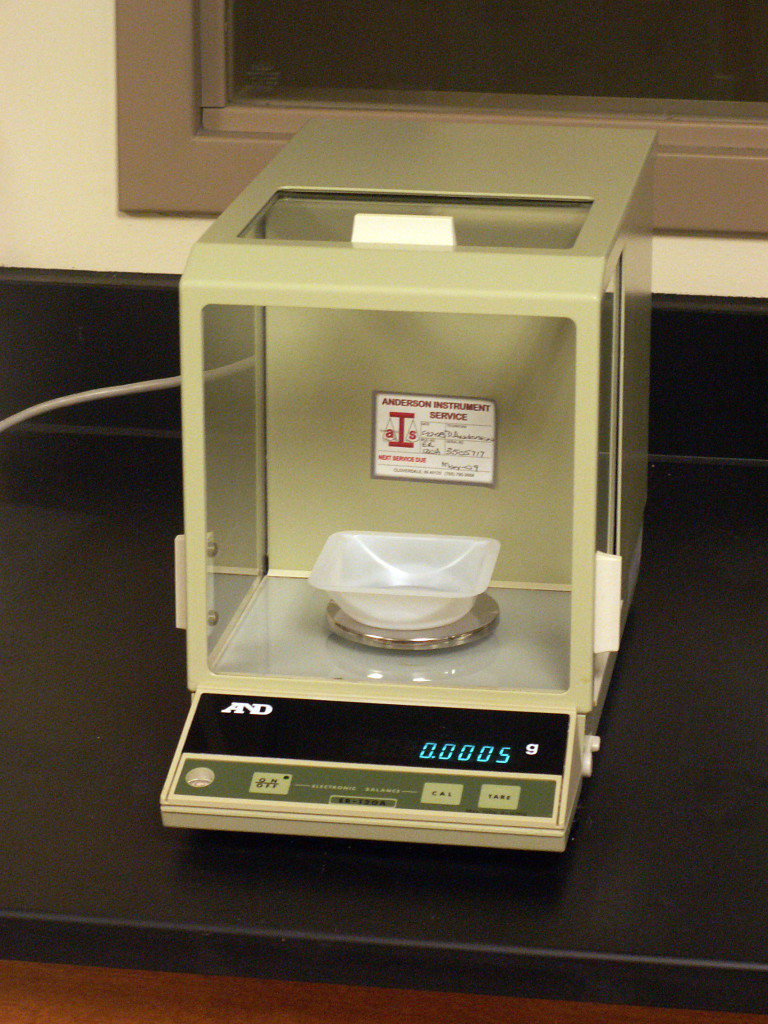
An electronic balance is the most common method for determining a sample’s mass.

Here is how the electronic balance works. An electromagnet levitates the balance’s sample pan above a permanent cylindrical magnet. The amount of light reaching a photodetector indicates the sample pan’s position; the amount of light reaching the detector in the absence of a sample defines the balance’s null point. Placing an object on the balance displaces the sample pan downward by a force equal to the product of the sample’s mass and its acceleration due to gravity. The balance detects this downward movement and generates a counterbalancing force by increasing the current to the electromagnet. The current returning the balance to its null point is proportional to the object’s mass.