
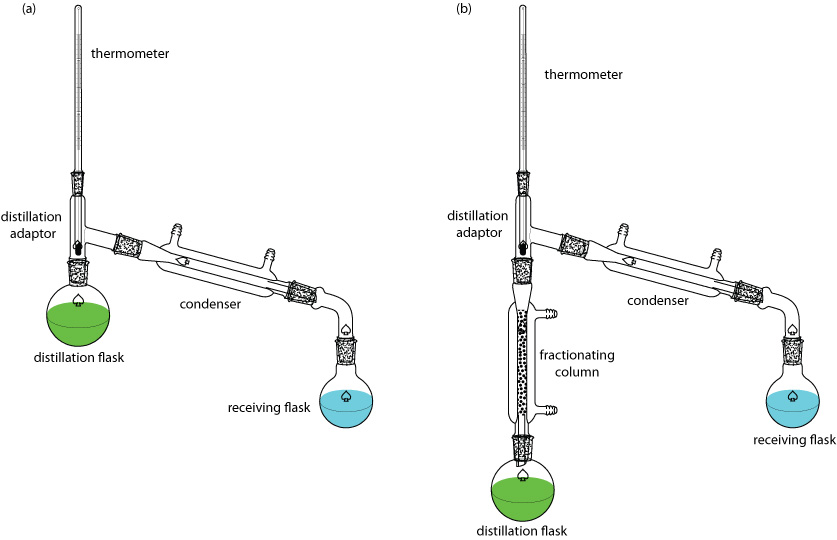
Two experimental set-ups for distillations are shown in this figure. The simple distillation apparatus shown on the left does not produce a very efficient separation, and is useful for separating a volatile analyte (or interferent) from a non-volatile interferent (or analyte), or for separating an analyte and interferent whose boiling points differ by more than 150 oC. A more efficient separation is achieved by a fractional distillation shown to the right. Packing the distillation column with a high surface area material, such as a steel sponge or glass beads, provides more opportunity for the repeated process of vaporization and condensation necessary to effect a complete separation.
Simple and Fractional Distillation


About the Author

David Harvey
David T. Harvey is a Professor Emeritus of Chemistry and Biochemistry at DePauw University in Greencastle, Indiana, where he has been a dedicated faculty member since 1986. Over his nearly four-decade career, Dr…
View contributions